OnePlus has been dropping hints that it is working on a smart TV since last year. We had nothing concrete on the TV, up until it was listed on Bluetooth SIG, revealing that it will come in a big variety of sizes (from 43 all the way up to 75 inches) and have an LED panel.
Little else was known, beside this, but just recently, a community representative took to the OnePlus forums and actually confirmed what the TV will be called, sharing alongside a (supposedly) final logo for the device. And, you guessed it, it's called the OnePlus TV... wait, what did you expect? It's the most logical naming scheme, and the company thought as much:
"Yes, we are going to call our very first smart TV product "OnePlus TV" – simple yet to-the-point – as we believe there's no other name that can best represent our value, vision and pride than naming it with our own brand."
The forum thread also reveals the official logo for the OnePlus TV (pictured above), which consists of the OnePlus logo with the letters TV next to it. Again, what else did you expect?
Out of all the Bluetooth SIG listed OnePlus TV sizes, only the 75-inch version is said to be US-bound. Smaller OnePlus TVs will be launched in other parts of the world, with the 43-inch version, which is the smallest of the bunch, being an India-exclusive.
Additional 55-inch and 65-inch OnePlus TV models appear on Bluetooth SIG as well, though it's unclear where they will be released. Although OnePlus filed 40 model numbers for certifications on Bluetooth SIG, not all of them are different OnePlus TVs. These model numbers are merely indicators about the size and region where they will be launched.
FILE PHOTO: A woman stands in front of the logo of Snap Inc. on the floor of the New York Stock Exchange (NYSE) while waiting for Snap Inc. to post their IPO, in New York City
By Sheila Dang
(Reuters) - Snap Inc <SNAP.N> said Tuesday it will launch a new version of its Spectacles sunglasses, which will have the capability of capturing photos and videos and uploading them directly to its unit Snapchat, as the technology company works to develop its augmented reality features.
Snap has struggled to make money from its Spectacles business, and wrote down $40 million in unsold glasses in 2017.
The new Spectacles, limited edition and with fewer produced than in previous versions, allows Snap to continue experimenting with augmented reality, a key focus for it.
Spectacles 3, which will begin shipping in the fall, will cost $380, almost twice the previous version at $200 apiece. It will have dual cameras to add depth and dimension to photos and videos. After uploading the content to messaging app Snapchat, users can add new lighting, landscapes and three-dimensional effects to the images, Snap said.
Snap gained fame among its young users in part through its augmented reality (AR) features, including lenses that can overlay effects like dog ears on photos, or even change a user's gender in Snap images.
The company added 13 million users in the second quarter, of which 7 million to 9 million were from the new AR lenses, Snap said.
Last week, Snap said it would raise $1.1 billion in debt to fund further investments in AR, content and possible acquisitions.
Snap should focus on earning more money from its content, and could potentially make investments in music, "a natural thing for people to share" on social media, said Jim McVeigh, founder of Cyndx, an investment search platform that connects companies with firms seeking to be acquired or to raise capital.
(Reporting by Sheila Dang; Editing by Bernadette Baum)
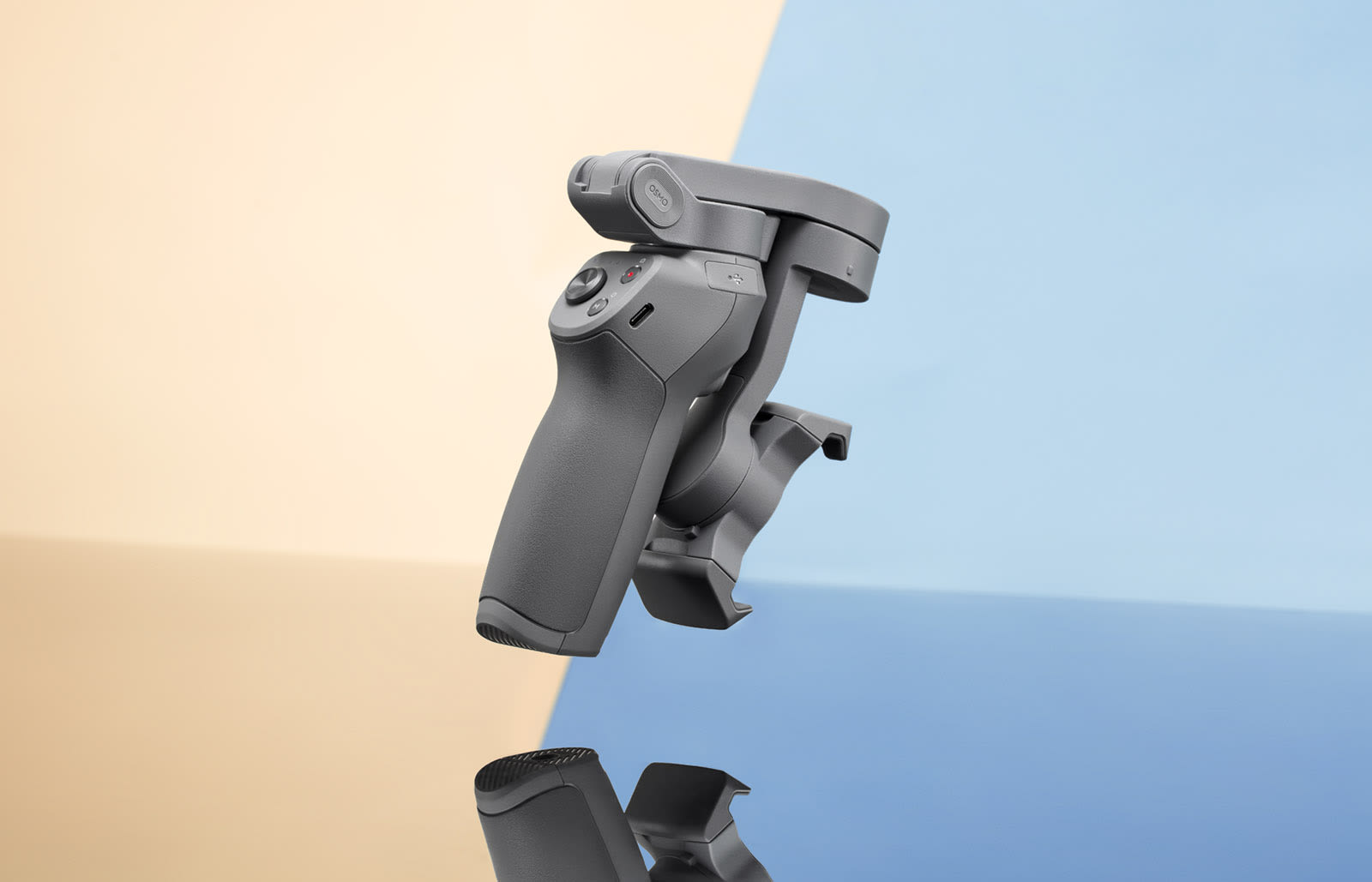
DJI continues to improve its smartphone gimbal technology with the launch of the Osmo Mobile 3, a cheaper and more travel-friendly version of its last model. The electronic stabilizer has an all-new folding design and locking mechanism that takes up a lot less space. At the same time, it's easier to operate thanks to a new Quick Roll control that switches the gimbal from portrait to handheld mode with no need to remove the phone.
Despite the extra folding mechanism, it's still lightweight and lets you shoot for up to 15 hours before the battery dies. On top of that, it gets rid of one big complaint with the Osmo 2. "The redesigned form no longer obstructs the charging and audio ports, allowing for easy connection to charge the device or use external mics," DJI wrote.
Otherwise, the Osmo Mobile 3 packs many of the same features of the Osmo 2, letting you maneuver it with a joystick and choose modes like Story, Sport, TimeLapse and Slow Motion. As before, various triggers let you zoom, lock and unlock the orientation, and flip around to a selfie view. The ActiveTrack mode, activated by tapping the trigger once, will track the subject and keep them centered in the frame.
Perhaps the most interesting part is the new, lower price. The Osmo Mobile 3 is now available for $119 for the standard version, $10 less than the last model. If you want to go fancier, you can splash out $139 for the Osmo Mobile 3 combo which includes the Osmo Grip Tripod and a carrying case.
DJI continues to improve its smartphone gimbal technology with the launch of the Osmo Mobile 3, a cheaper and more travel-friendly version of its last model. The electronic stabilizer has an all-new folding design and locking mechanism that takes up a lot less space. At the same time, it's easier to operate thanks to a new Quick Roll control that switches the gimbal from portrait to handheld mode with no need to remove the phone.
Despite the extra folding mechanism, it's still lightweight and lets you shoot for up to 15 hours before the battery dies. On top of that, it gets rid of one big complaint with the Osmo 2. "The redesigned form no longer obstructs the charging and audio ports, allowing for easy connection to charge the device or use external mics," DJI wrote.
Otherwise, the Osmo Mobile 3 packs many of the same features of the Osmo 2, letting you maneuver it with a joystick and choose modes like Story, Sport, TimeLapse and Slow Motion. As before, various triggers let you zoom, lock and unlock the orientation, and flip around to a selfie view. The ActiveTrack mode, activated by tapping the trigger once, will track the subject and keep them centered in the frame.
Perhaps the most interesting part is the new, lower price. The Osmo Mobile 3 is now available for $119 for the standard version, $10 less than the last model. If you want to go fancier, you can splash out $139 for the Osmo Mobile 3 combo which includes the Osmo Grip Tripod and a carrying case.
Chinese tech conglomerate DJI is continuing a torrid summer for new product releases with another announcement: the DJI Osmo Mobile 3. The third-gen handheld smartphone stabilizer has several new features, but the biggest is that the Osmo Mobile 3 folds up for easier packing.
The Osmo Mobile 3 costs $119 and is on sale starting today. DJI is also selling a combo pack that includes a tripod and carrying case for $139.
Overall, the Osmo Mobile 3 is shorter and smaller than its predecessors, meaning it should be easier to hold for longer periods of time. But DJI didn’t cut corners or skimp on features to make this happen. In fact, it even brought back the trigger button from the first-generation Osmo Mobile.
The company says the controls have been streamlined so the new Osmo Mobile is easier to use one-handed, and the folding design has also opened up access to ports that can charge the user’s phone or allow them to hook up an external microphone. The Osmo Mobile 3 has roughly the same 15-hour battery life as its predecessor, though it now charges via USB-C.
Not being able to easily pack away the Osmo Mobile was a common complaint with the first two generations of the product. DJI also says users complained that it wasn’t easy enough to quickly switch the smartphone’s orientation from portrait to landscape (or vice versa). That has been fixed with the Osmo Mobile 3. Users can now just tap the “mode” button three times, and the gimbal will rotate the smartphone automatically.
Just like it did with the Ronin SC gimbal and the RoboMaster S1 toy tank earlier this year, DJI is taking some of the smart features it developed for its drones and bringing them to the Osmo Mobile 3 via the Mimo app. The headliner is Active Track, DJI’s computer vision tracking system. There are also options like time-lapse, hyperlapse, panorama, gesture control, and a “story mode” that automatically edits footage together for beginners.
DJI is best known for its flying drones, but it’s been a while since the company released a new product in that category. Instead, DJI has spent most of 2019 broadening its portfolio and iterating on other popular products. The Ronin SC is a more refined, portable, and affordable gimbal for mirrorless cameras. The Osmo Action is a legitimate GoPro competitor, despite being DJI’s first entry into the category. The company released a new set of FPV goggles and a tiny camera tailored for drone racers and filmers, as well as the more educational-focused RoboMaster S1. The Osmo Mobile 3 is just the latest example of the Chinese company’s growing consumer product prowess.
In May 2015, Google set out a bold vision: it was going to get rid of passwords on Android phones. A year later, under the codename Abacus, it pledged to bring password-free logins to the operating system's apps by the end of 2016.
Fast forward three years and the password is still alive and being abused – the most used password is still 123456 (closely followed by other obvious combinations). But now, Google has taken a step towards actually eliminating some password reliance through Android and Chrome.
Starting from this week people using Android phones will be able to log in to web services in Chrome by using a fingerprint stored on their device. It's a small step closer to a password-free world. Phone owners running at least Android Nougat, which was released in 2016, can use their fingerprint to get into web services.
"New security technologies are surpassing passwords in terms of both strength and convenience," Google software engineer Dongjing He and product manager Christiaan Brand wrote in a blog post outlining the change.
But there's one big caveat: at the moment the login system is hugely limited. In fact, the only web service that it's possible to access without you password is Google Chrome's password manager. If you navigate to passwords.google.com through Google's web browser on your Android and tap on a previously saved piece of information, you'll be prompted to use the fingerprint saved on your phone to access the data.
This method only works because of three sets of internet standards: FIDO2, W3C WebAuthn and FIDO CTAP. The trio outline technical methods that web services should aim to use when it comes to user logins and passwords. The ultimate aim is to allow users to login and register for services using devices they trust and extra authenticating information, such as fingerprint or facial data.
The membership of the FIDO Alliance, which is responsible for the standard of the same name, shows the tech industry's desire to do something about poor user passwords. FIDO is made up of Facebook, Intel, PayPal, Intel, Visa, Amazon, and more companies, and has been working on helping to replace passwords for years. It's only just starting to make some traction though.
The FIDO2 standard is better than user passwords as it protects login details using public/private key encryption. This works by storing a private encryption key on a device – a phone or a security key, for instance – and a public key is held by the company your account belongs to. When a person tries to sign in to their account, the private key is unlocked by the use of a fingerprint or other biometric and it's matched with the public key to access your information.
In November 2018, Microsoft launched its biometrics login system, Windows Hello, on its Edge browser. This means people can sign in to their Microsoft account without having to provide a password. Microsoft accounts include Outlook, Office, and Skype.
At present Google's expansion of combining Android and Chrome for logging in to services is very limited. The number of times you need to access the service's password manager – if you even use it – is pretty infrequent, but the step forward precedes a major rollout like Microsoft's.
"These biometric capabilities are now, for the first time, available on the web, allowing the same credentials be used by both native apps and web services," He and Brand said. But even this limited rollout is significant because Google has vastly more web power than Microsoft. Android has more than two billion monthly users and Chrome is used by approximately 70 per cent of people browsing the web.
Google could easily introduce the passwordless feature across its other services. In a talk last year Brand said the bigger vision using the web standards was to allow people to easily login to services without having to re-enter all of the details each time. "We want to make things easier for the user," he said.
During a demonstration he showed how Google's services could be at the centre of this: once a user had signed in to a banking account on their Android phone, they would then be able to access the same website on a MacBook with a fingerprint scanner through Chrome, without entering a password again.
The company hasn't yet announced when Gmail and its myriad of other services will support Android logins without passwords, but change is coming. "As we continue to embrace the FIDO2 standard, you will start seeing more places where local alternatives to passwords are accepted as an authentication mechanism for Google and Google Cloud services," the company staffers wrote in their blog post.
Samsung's Note 10 in an array of different colors.
Andrew Hoyle/CNET
If you already think there's a dizzying number of Galaxy phones to keep track of, Samsung just added more to the pile. On Aug. 7, the company unveiled three Note phones, the Note 10, Note 10 Plus and Note 10 Plus 5G, which are considered to be the upper "top-tier" end of the premium phone spectrum. They join six other Galaxy phones that Samsung announced this year, bringing the total number of new Galaxy phones you can buy to nine(!).
From budget devices and 5G phones, to one in particular that can fold in half (yes, really), we round up the latest Galaxy phones, tell you what makes them special from all the others and order them from cheapest to most expensive.
Note that these products are independently chosen by our editors. CNET may get a share of revenue from the sale of products from the links.
Angela Lang/CNET
The Galaxy A50 is part of Samsung's A-series, which is much cheaper than the top tier S-series of phones. At $350, £309 or AU$500, the A50 is one of your cheapest Galaxy options and features a 6.4-inch display, an in-screen fingerprint reader and a headphone jack. On the back are three cameras that include a wide-angle lens as well as a "depth lens," which is used to take portrait shots with blurry, dramatic backgrounds.
Angela Lang/CNET
As the most wallet-friendly Galaxy S10 phone, the $750, £669 and AU$1,199 Galaxy S10E has a lot to offer. It's a smaller phone, which is great for those looking for a comfortable grip, and it has a super-fast Snapdragon 855 chipset and a long-lasting battery life. Like other S10 phones, it can wirelessly charge other phones and accessories, like a pair of wireless earbuds or a smartwatch.
Andrew Hoyle/CNET
Like all of Samsung's Galaxy S10 phones, the standard Galaxy S10 is built from the best parts. It has a wonderfully sharp screen and a long battery life. Camera quality is awesome and it comes with all the extras, including the ability to wirelessly charge another device or accessory.
Angela Lang/CNET
As the standard model of Samsung's newest line of ultraluxe phones, the Note 10 features a 6.3-inch display, three rear cameras, an in-screen fingerprint scanner and a signature S Pen stylus that can remotely control the phone's camera via Bluetooth. It also doesn't have a headphone jack or expandable memory.
Angela Lang/CNET
The Galaxy S10 Plus has a big 6.4-inch AMOLED screen, loads of useful camera tools and one of the longest battery times we've tested on phones this year, lasting an excellent 21 hours during our lab test for continuous video playback on Airplane mode. Unlike the Galaxy S10, it has two front-facing cameras instead of just one.
Angela Lang/CNET
As the Galaxy phone with the biggest screen (that doesn't fold, that is), the Note 10 Plus has a huge 6.8-inch display. Like its Note 10 counterpart, it has a single front-facing camera but in addition to its three rear cameras, it has a fourth depth-sensing camera. And while it doesn't have a headphone jack either, it does have expandable memory, unlike the Note 10.
Angela Lang/CNET
The Galaxy S10 5G is Samsung's first phone that can connect to the next-gen network of high-speed mobile data known as 5G. Initially launched on the US carrier Verizon, the Galaxy S10 5G costs $1,300, £1,099 and AU$1,999, which has a 6.7-inch display, the same four-camera setup as the Note 10 Plus and a second depth-sensing front-facing camera. The device is also available on Sprint and T-Mobile, as well as AT&T but only for business.
Sarah Tew/CNET
The Note 10 Plus 5G is pretty much identical to the regular Note 10 Plus but like the S10 5G, it connects to 5G networks. Because of this, the phone weighs about 2 grams heavier and is more expensive than the Note 10 Plus by $200. It will be available on the US carriers Verizon, AT&T and T-Mobile, as well as in South Korea and other international markets, but it may not be worth investing in the phone just yet.
Angela Lang/CNET
As the most unique Galaxy phone, the Galaxy Fold has a secondary 4.6-inch display that serves as its "cover." It then opens up like a book to a 7.3-inch tablet. The Fold also has six cameras: on the back, there's the same triple-camera setup as the Galaxy S10 and on the front a single 10-megapixel camera. In tablet form, there are two additional cameras inside: a selfie camera and an 8-megapixel depth camera.
Preorders began in April, but after reports of screen breakages, flickering and, bulging with preproduction units, Samsung has delayed the Fold until September. (For more information, read CNET's Galaxy Fold FAQ.) Because of the phone's novel design, the Fold is the most expensive phone of the bunch, costing $1,980 (about £1,500 or AU$2,800).