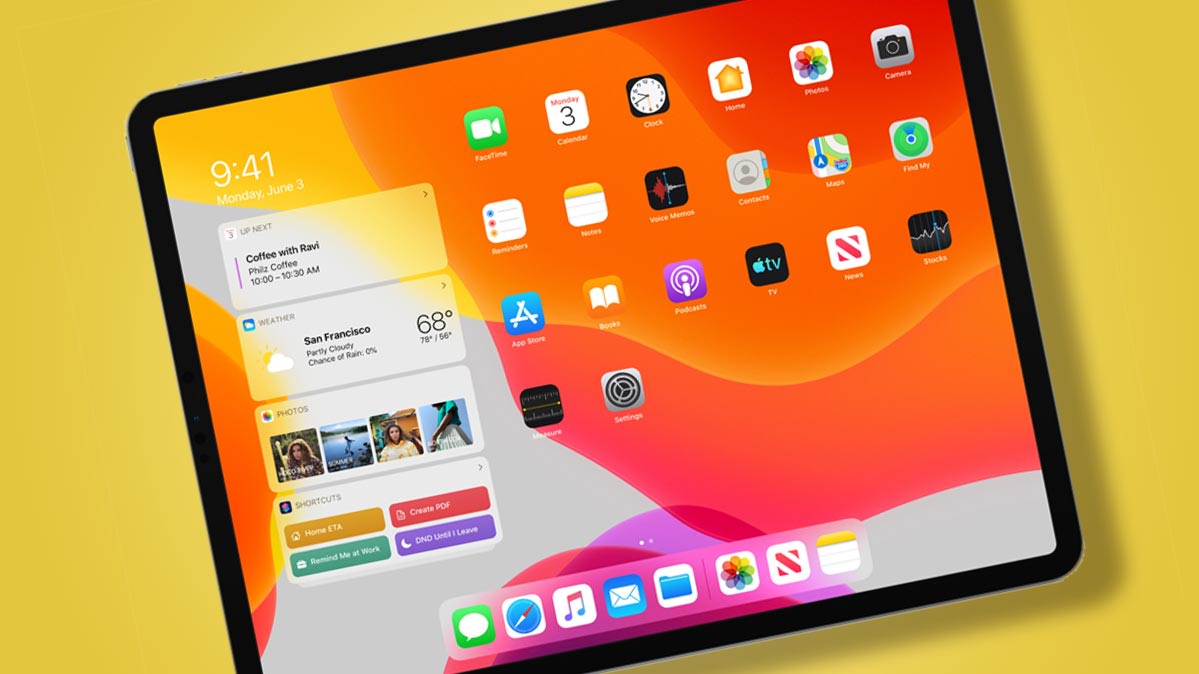
Apple says that it wants software to take better advantage of the iPad’s large screen. Two pieces of software in the beta version iPadOS already show this: an improved version of the Safari web browser and a software keyboard that can be shrunk and moved around the screen.
Apple calls the iPadOS version of Safari a “desktop class” web browser, meaning that when you visit complex websites, you should get the full-sized version instead of the shrunken down version you'd see on a smartphone or iPad running iOS 12 and older.
This worked well in our experience: Popular websites such as nytimes.com, yahoo.com, tmz.com, and, yes, ConsumerReports.org all appear just as they would on a Mac or PC, meaning you don’t have to pinch and zoom around simply to read the latest headlines, which sometimes happens pre-iPadOS.
The onscreen keyboard works well, too. New to iPadOS is what Apple calls a Floating Keyboard, which you can activate by pinching the regular onscreen keyboard. The keyboard then shrinks, and you can drag it around the screen.
This is handy because it allows you to type a quick note while keeping both hands on the iPad—the app window is where your thumb naturally rests.
Another way Apple is taking advantage of the larger screen of the iPad is by letting you permanently pin Today View (a small window containing widgets such as weather and headlines) to the left side of the screen while you’re in the main home screen. There’s still room for plenty of app icons to the right, but this gives you an immediate heads-up on some key information.
New to both iPadOS and the iPhone's iOS 13 is the ability to type much more quickly by swiping from letter to letter. This is the key feature in popular third-party keyboards, including SwiftKey and Google’s Gboard.
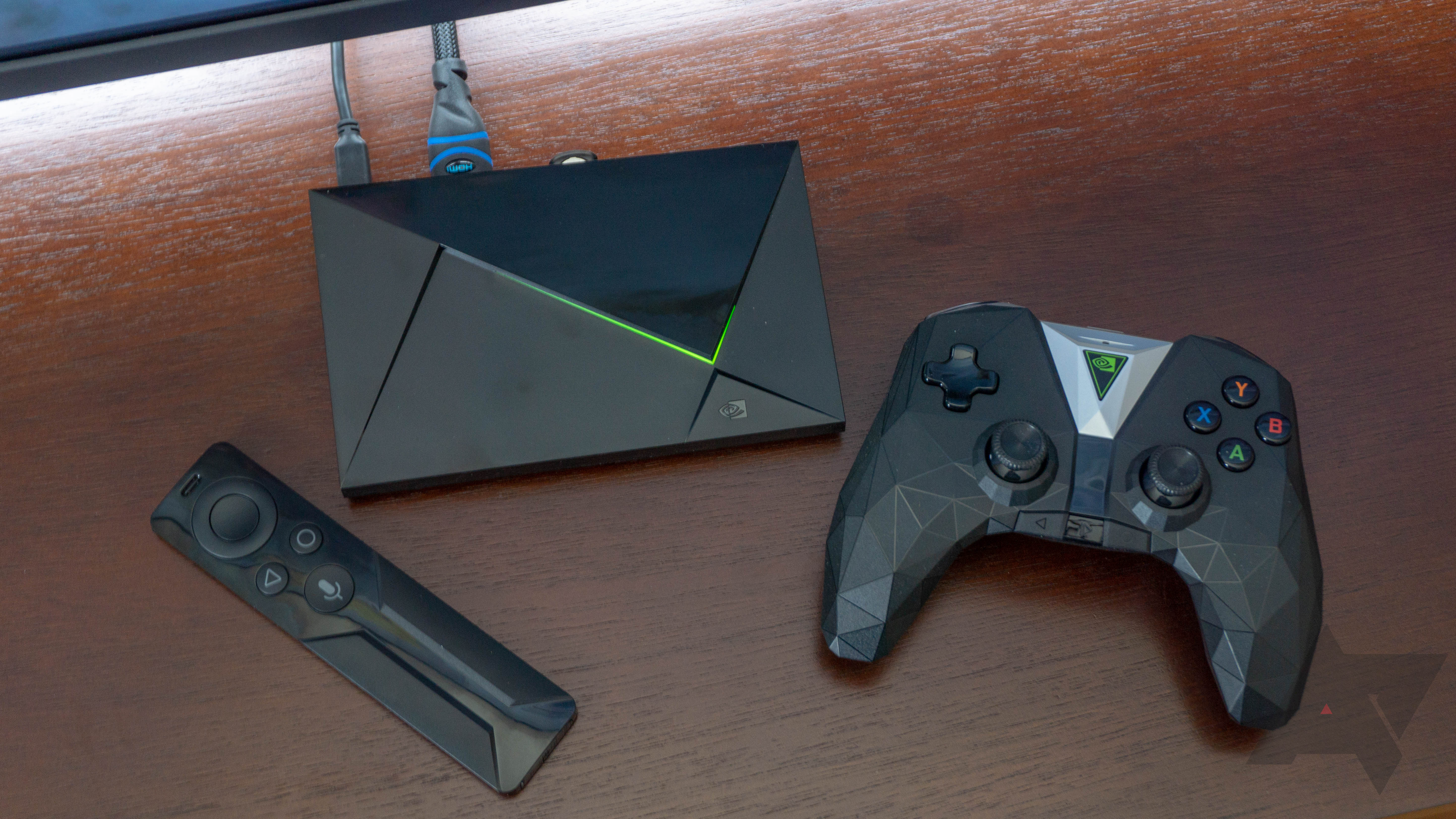
A new variant of the Nvidia Shield has popped up on the Google Play Developer console. The new hardware goes by the hardware codename "mdarcy," in contrast to the current model's "darcy," and it will run Android 9 Pie.
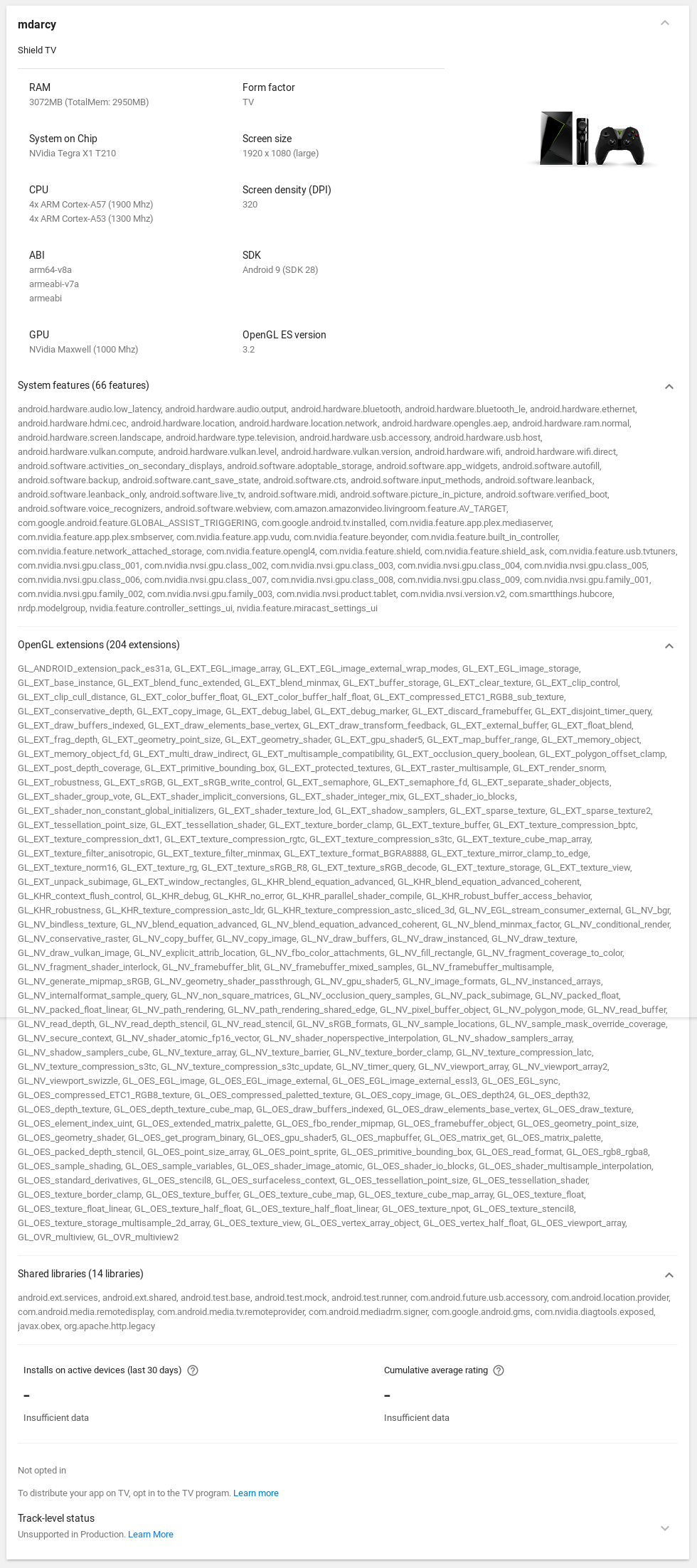
Left: Current "darcy" Developer Console listing. Right: New "mdarcy" listing. Click to zoom.
There are a few differences between the two hardware listings, but chief among them is support for the Android 9 SDK on the new version, which would indicate it will be launching with Android 9 Pie. The new "mdarcy" listing has the same Tegra X1 T210 SoC listed as the current Shield TV, but that doesn't necessarily mean the hardware is unchanged. This could just be a placeholder, and an updated t210b01 Tegra SoC has been spotted in connection with it, though it could also go by the same product name.
Difference in features between mdarcy (red) and darcy (green), white is shared.
There's a hotword system feature associated with the darcy hardware that isn't present in mdarcy. Although there's a new mention of adoptable storage in mdarcy, previous hardware supported the feature as well.
A few months back, XDA spotted two new remote hardware codenames from Nvidia: "stormcaster" is a new Shield controller, and "friday" is a new Shield remote. That hardware could also debut with this new Shield TV.
This new model appears to be a minor refresh, as the barely-changed "mdarcy" hardware codename would imply. It's speculative, but this refresh could also accompany a general update for the product line to Android 9 Pie — Nvidia's 2015 Shield TV is among the longest-lasting hardware to ever run Android, and the company has continued to update it even as the slimmer 2017 model replaced it. As we previously mentioned, some of the details in the Play Console listing could also be placeholders, and there may be other changes and newer features associated with this new hardware.
The original diff was labeled incorrectly, as a result some of the speculation regarding hotword support is likely incorrect and has been removed. Mentions regarding the system features being compared have been swapped.
A little over a year after discontinuing its Mac desktop app, Twitter says that it’s bringing the program back after Apple unveiled Project Catalyst for macOS 10.15 Catalina. It explained why it decided to drop the app last year.
Twitter made the announcement during Apple’s WWDC conference last week, saying that the app would launch with Catalina this fall, and that this new version will have a variety of features like dark mode, keyboard shortcuts, multiple windows, and notifications.
In February 2018, Twitter pulled the application from Apple’s App Store after a history of sporadic updates, and recommended that people simply use the web version. In its post yesterday, it also provides a bit more of an explanation for why the original Mac app was discontinued: while it originated with the iPhone app, the Mac app “diverged as Twitter increasingly focused on its mobile apps,” and the company simply couldn’t maintain the two.
Twitter says that with Project Catalyst, they’ll be able to use their existing iOS codebase and will add on features for desktops “while keeping our maintenance efficient as we continue to improve this shared codebase in the years to come.”
Amazon has shut down its social network-like feature on its site and app called Amazon Spark, in which Prime customers could post pictures of the products they’ve bought, according to TechCrunch.
The company launched the service for Prime members in 2017. It prompted customers to pick a selection of interests in the section in the feature, and would then show you a feed of posts from users that related to those interests. The service seemed to be designed to replicate influencers using social networks like Instagram and Pinterest. Users could react to posts with a “smile” or a comment.
TechCrunch noted that the site felt “too transactional” as compared to other social networks and never really took off. The page for the feature is no longer on Amazon and its app, and its URL now redirects to “#FoundItOnAmazon” for some users or to “Your recently viewed items and featured recommendations.” Amazon didn’t explain why it shut down the site.
Amazon doesn’t appear to be giving up entirely on social feed-driven product discovery. TechCrunch notes what Amazon learned from Spark and another feature called Interesting Finds (which is still operational) are being incorporated into #FoundItOnAmazon, although that feature appears to be focused mainly on home decor.
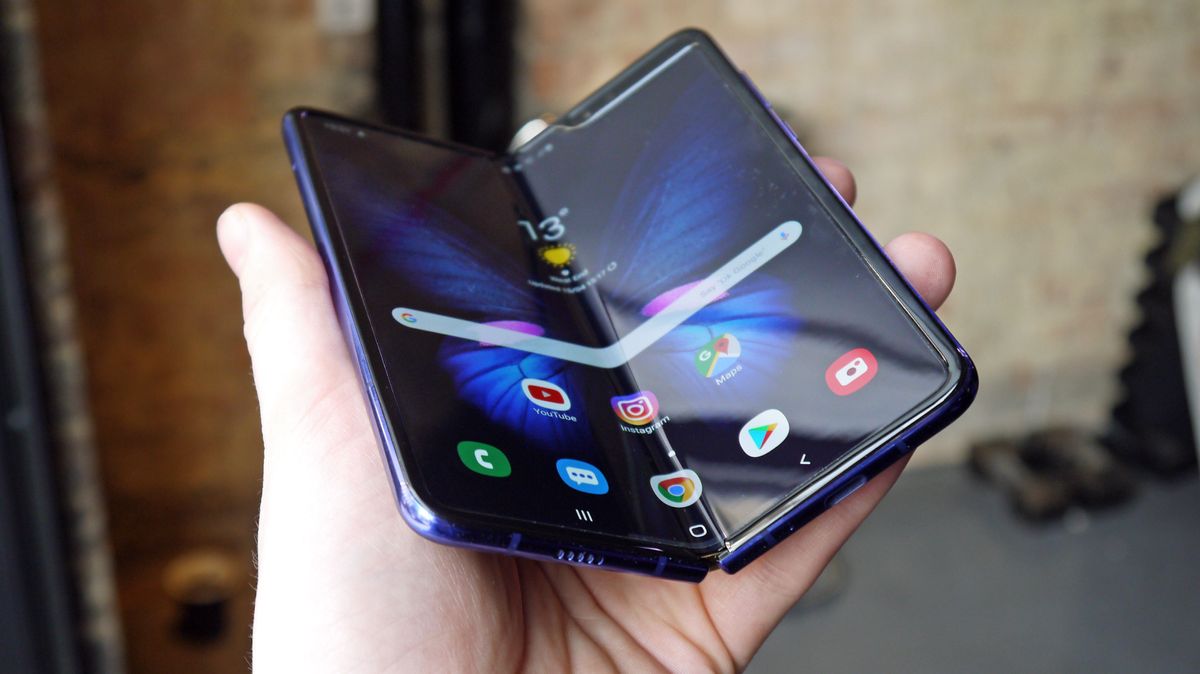
It's not easy launching a foldable phone in 2019, as Samsung is quickly finding out: the latest reports from Asia suggest that its innovative Galaxy Fold handset won't be going on sale until August.
That means the Samsung Galaxy Note 10 might be out and available to buy before the folding handset that we first saw demoed back in February.
The bad news for folding phone fans comes from the Korea Herald, which says Samsung itself has denied the handset is going to be appearing in July (that was a prediction based on comments from a Samsung Electronics official).
Treat yourself to a Galaxy Fit
iPhone 11 upgrade rumors
Huawei removes its lock screen ads
Apparently "little progress" seems to have been made on sorting out the folding hinge on the device, which has been the cause of numerous breakdowns in early review units.
The waiting game
The launch date in the US had been set for April 24, but that came and went after the first units to get into people's hands started suffering some durability problems.
Samsung then postponed the official on-sale date until a specified date in the future – we're still waiting to hear when that might be. Pre-orders for the phone have been canceled in the meantime.
The Galaxy Fold isn't the only foldable handset having problems either: Huawei has decided to delay the launch of its Mate X foldable, citing concerns over the longevity of the handset.
Getting the technology right is obviously a massive engineering challenge, but let's hope we see the Galaxy Fold and the Mate X made available to consumers before too long.
If the tale of the tortoise and the hare applies to foldable phones, Samsung and Huawei are learning the hard way that being first still won't guarantee the prize. The phone-makers wanted their Galaxy Fold and Mate X to prove how exciting and successful a foldable phone could be. Instead, we got a lot of flash and -- so far -- little substance.
These snafus threaten to derail what was once heralded as one of the biggest leaps for mobile phones. Foldable phones promised to double the screen size and revolutionize design at a time when phone sales have waned amid lackluster annual aesthetic upgrades.
But major hiccups are dampening enthusiasm for the bendable devices before they even come out. A foldable phone has to employ flexible plastic, which make them especially vulnerable to nicks and gouges, pressure damage and bulges formed by debris tunneling under the display. These delays cast doubt on how well the radically expensive devices hold up to constant use.
The delays don't come as a total surprise. The phone brands only showed off their foldable phones briefly, unlike other phones that see much more time in reviewers' hands before the final review unit appears. We used the Mate X for about five minutes in March and first touched the Galaxy Fold moments before we received our review unit in April. The phone-makers' elusive attitude was a strong tip-off that the foldable devices weren't ready for prime time.
The Fold was announced February 20 and was supposed to sell 50 days ago on April 26. Huawei unveiled the Mate X a few days later and was slated to sell in June. Samsung declined to comment. Huawei did not respond to a request for comment.
The Mate X's screen bends outward, which means the plastic display covers the exterior of the phone frame.
Andrew Hoyle/CNET
Plastic is a problem, but bendable glass is years away
From the very beginning, phone-watchers remarked that the Galaxy Fold and Mate X's foldable plastic screens could be their very undoing. Because who wants to spend $2,000 or more on a scratch-prone phone?
Observers were mostly concerned about the "ugly" crease you see when you unbend a foldable phone into its full-screen mode, and if this could lead to wear and tear over hundreds of thousands of bends. The crease either appears as a ridge or a valley depending on if the larger screen unfolds on the inside or outside of the device. For example, the Galaxy Fold opens like a book to reveal an interior 7.3-inch display, where the Mate X's 8-inch screen acts more like the book cover that wraps around the outside of the frame.
Now playing:Watch this:
Our Galaxy Fold didn't break. Here's what's good and...
10:12
A plastic screen prone to scratches on its softer surface was another issue, especially for outward-bending models like the Mate X, where more of the delicate screen is exposed.
In the Galaxy Fold's case, where Gorilla Glass protects the interior screen when the phone is closed, I still noticed indentations and scratches on the plastic cover material after just seven days. Some of the Fold's issues arose because reviewers peeled off a protective layer that wasn't intended to come off, which made the phone immediately stop working. Samsung has reportedly fixed these problems, but hasn't shared when it plans to put the Galaxy Fold on sale.
The key to making phones stronger is bendable glass, which won't be ready for a few years. CNET got an exclusive look at Corning's bendable glass, which, even if fragile, is still expected to offer a degree of protection over the Galaxy Fold and Mate X's plastic screens.
Although the ban received a temporary reprieve that allows Huawei to support current products, it's uncertain if the Mate X falls into that category. The Mate X was announced before President Trump signed the executive order against Huawei, but not yet released.
If Huawei needs Google's support for foldable phones and Android apps to sell the Mate X outside of China, that could certainly influence its decision to wait. The Wall Street Journal reported that sourcing parts wasn't an issue, according to Huawei SVP Vincent Peng, but that Huawei and Google are still discussing the license over Android apps.
Android Q supports foldable phones.
Google
Don't give up on foldable phones yet
It's too soon to declare foldable phones dead. Samsung and Huawei still plan to launch an improved Galaxy Fold and the Mate X, respectively, and Google declared support for foldable designs in May at its annual Google I/O conference for developers. That means app-makers are already optimizing their software to work on foldable phones.
While off to a stuttering start, these companies have invested millions into foldable designs. It's a gamble that they're counting on to pay off in the long run.
Apple often waits years after a category is established -- think smartphone or smartwatch -- before coming in with a fully polished product.
The very first foldable phone models were always going to be niche, beta-style devices for bleeding-edge adopters, models that reveal the strengths and weaknesses of a brand-new design ethos that their makers could then fine-tune down the line.
Samsung and Huawei aimed to score the first points and force rivals to follow suit. But if competitors are learning any lesson, it's to slow down and get their foldable designs right. Hopefully Samsung and Huawei are taking note, too.
The iOS 13 developer's beta may have revealed a major clue about a new feature coming to the 2019 iPhones, and another long-time iPhone feature could be on the chopping block. In this week's Apple Core roundup, we're looking at what the latest rumors are speculating about the next iPhone and Apple's slip-up with the MacPro release date on its website.
Now playing:Watch this:
iOS 13 beta hints at USB-C iPhone in 2019
5:48
2019 iPhone lineup may switch to USB-C
WWDC 2019 may be over, but it's left behind a trail of clues that hint at what Apple is planning for its next batch of product announcements. The latest clue could suggest a USB-C on the 2019 iPhones. This week Apple user Raphaël Mouton published a picture on his Twitter account of the recovery screen on an iPhone running the developer's beta of iOS 13. At first glance it just looks like an image of a Mac and the top end of a cable -- but that's no Lightning cable.
The existing iPhone recovery mode image clearly shows a Lightning cable tip, while the one in the beta looks more like a USB-C tip as pointed out by Forbes. This could be a sign that Apple is planning to swap out the Lightning port for the more widely used USB-C port in its 2019 iPhone lineup, a rumor that's been making the rounds since before the 2018 iPhone launch cycle. Also, it wouldn't come as too much of a shock considering Apple has already made the change from Lightning to USB-C on its 2018 iPad Pros and MacBooks.
The more likely possibility is that the image refers to the USB-C end of a USB-C-to-Llightning cable going in to the Mac. Which hopefully means Apple is planning to include this type of cable as well as a 18W fast-charging USB‑C Power Adapter in the box with its new phones.
3D Touch may get the axe
The new features on the next batch of iPhones could come at a price though, as rumors about Apple eliminating 3D Touch continue to gain steam. After a visit with Apple suppliers in Asia, Barclay analysts, cited in MacRumors, seemed certain that Apple will eliminate this feature in the 2019 iPhone lineup.
This pressure-sensitive technology allows users to access more control options by pressing harder on the phone's screen. Apple first debuted 3D Touch in its iPhone 6S. It was meant to help with navigation once Apple decided to get rid of the home button with the iPhone X, but it hasn't proven to be critical. Apple replaced 3D Touch in last year's iPhone XR with Haptic Touch (its fancy term for a long-press with a slight vibration) to make room for a larger, nearly bezel-less LCD display. And though it doesn't have as much functionality as 3D Touch, it's proved to be a good compromise for users.
Now playing:Watch this:
5 best uses of 3D Touch on the iPhone
1:21
We won't know for certain whether or not Apple will eliminate 3D Touch until the iPhone 11 launch in September, but we can rest assured that the functionality will remain, at least to some degree (whether via Haptic Touch or otherwise). The developer's beta of iOS 13 includes even more use-cases for it, and it's unlikely Apple would add more ways to use a defunct feature in iOS.
At WWDC, the company said the new MacPro and 6K display would be available this fall, but didn't specify when. Then for a brief moment, if you clicked on the "Notify me" link above the Mac Pro on the Apple.com homepage, the pop-up read "Coming in September." But then if you clicked on the product page and did the same, it read "Coming this fall".
Justin Jaffe/CNET
By the time Apple noticed and corrected the slip, it has already been published on 9to5Mac and MacRumors, and made its way around the internet. It has since been corrected to match the other notifications, and Apple has not responded to a query about when the new products will ship.
That said, I'd definitely put my money on a September release date for the Mac Pro, maybe even the day of the iPhone reveal.