Rabu, 12 Juni 2019

Why Google’s surprise Pixel 4 tease raises the stakes - The Verge

Well that was unexpected.

Just one day after we reported on the first Pixel 4 leaks, Google decided to mount a social media hype campaign by literally tweeting out an image of its upcoming Pixel 4. It was a savvy recognition of how the run up to phone launches actually work and an even savvier way to take advantage of that dynamic. It was also, I believe, a statement: The Pixel 4 is going to be unapologetically high end.

That’s just my prediction, but if Google is smart it will prove me right. With the release of the mid-range Pixel 3A smartphone this year, Google has created some space for itself to make something top of the line from both a software and a hardware perspective. That’s something we haven’t seen Google truly try to do yet with the Pixel line, and if it wants to prove it’s serious about making a real business out of selling hardware, it should be a priority.

Let’s back up and unpack all that, because the dynamics around Google’s Pixel line of phones are complicated and unique — and because maybe the tweet that kicked all this off shouldn’t have been unexpected at all.

If you’re not caught up — and who could blame you since this all went down within the last day — here is the story. Act one of the usual script for phone leaks kicked off with renderings of a possible phone and then a metal slug for case makers. We also saw a rumor of a unique feature — gestural control via a radar sensor.

We know how the rest of the script goes. Act two is yet more leaks of possible features. Act three are part leaks and glimpses of actual cases designed for the new phone. Act four is real photos of the new phone and (if you’re Google) some of them falling off a truck and getting “reviewed” before the phone is even released. Act five, the conclusion, is the official announcement. It’s always a tiny letdown, because we already know everything before an executive confidently strides on a stage somewhere to tell you how their latest device is the best one ever.

Google knows this script too. Everybody does. So really, what does the company have to lose by flipping it? We all know Google is going to release a new Pixel phone some time later this year. We all know that it’s going to get leaked six ways to Sunday before hardware chief Rick Osterloh can say peep about it. Why not just tweet out a photo acknowledging the phone is coming and — critically — actually drive the hype cycle instead of getting ground down by it?

Well, I will tell you why not: because it raises expectations. It sets a bar that’s higher than it otherwise would be if you just stayed silent. We are able to look at the big square camera bump and see that there are two camera lenses, a microphone hole, an LED flash, and what looks like a spectral sensor. We’re able to spend the intervening months speculating about just how much Google will be able to do with those parts. Asking what photography or video could possibly be good enough to justify that honking cube sticking out of the back of the phone. Picking apart every detail, acting like it’s basically been fully announced.

Google must really not be worried about hurting Pixel 3 sales right now — probably because they’re really uninspiring. The traditional reason companies don’t pre-announce products is because of the Osborne effect, where people won’t buy your current thing because they’re waiting for the new thing. Fair enough that Google is willing to risk that — but it’s quite a move to make right after it has just started selling Pixel 3 phones at T-Mobile and Sprint stores.

By posting the image, Google not only cleverly giving us stuff to speculate about, it’s doing so with a real image. It will get credit for driving a conversation that would have happened anyway. Most importantly, though, I see this as Google throwing down a gauntlet: speculate away, we got this. It’s a sign of not just confidence, but chutzpah.

Apple is rumored to be making a phone with a nearly identical square camera bump. So it probably tickles Google to know that it got its phone out there before Apple, even though — assuming Google sticks to the script — the next iPhone will come out in September while the Google phone won’t arrive until October.

But that little piece of cleverness doesn’t change the fundamental thing Google chose to do here: raise the stakes for itself. And in so doing, I believe the company needs to rise to the occasion. It needs to make the Pixel 4 something that doesn’t feel dowdy when compared to other flagships like the Galaxy S10, iPhone XS, Huawei P30 Pro (RIP), or even the OnePlus 7 Pro.

I say that not only because Google is engaging in a game of expectations chicken with this Twitter tease, but also because there is a powerful and real business need for it. The Pixel, Pixel 2, and Pixel 3 were all fine phones — and in some cases the best Android phones for most people. But they have never been the most impressive phones from a hardware perspective.

The Pixel 1 felt barely distinguishable from a Nexus phone. The Pixel 2 had those screen issues. The Pixel 3 seems to have persistent and persnickety RAM management issues (and a positively doofy notch on the XL model). All three, though, were not daring from a design or materials perspective.

The Pixel 4 might be — though we only have this one image to go off of. It jettisons the matte + glossy finish. It drops the rear fingerprint sensor. It’s different from before — and again, all signs point to it looking very much like the next iPhone. If your phone looks exactly like the next iPhone, it had damn better feel and perform as good or better than the next iPhone.

Google’s Pixel line now is bifurcated into two price tiers. The 3A is a great value, but it’s much harder to make that case anymore for the Pixel 3. Competing Android phones are faster, have better cameras, nicer screens, and yet still cost less. If Google wants to justify prices over $800 or $1,000 this year, it needs to make compelling hardware to justify that cost.

The Pixel also has a timing problem. It comes out in October, which is off the cycle for when Qualcomm releases its newest and best mobile processors. That means that every Pixel has a top-of-the-line chip when it’s released, but within 5 months there are other Android phones with much better chips and often fresher designs. Design isn’t the only thing that affects or drives sales, but it doesn’t help to having a dated-looking phone when everything else on a carrier shelf looks much cooler. Google itself knows how well this went with the Pixel 3, which it admitted did not sell as well as expected or even as well as the Pixel 2. Making nicer hardware that feels as premium as it costs is an important way to offset that issue.

The Pixel 4 is also going to be the second Pixel phone that Google is producing fully with its “Taiwan team,” aka all the HTC engineers it acqui-hired in January 2018. The first was the Pixel 3A, but that’s midrange phone. Now that all those HTC engineers are fully integrated into Google, the first flagship phone they produce needs to be great.

Last but certainly not least: Google finally started distributing Pixel phones across all US carriers this year (AT&T excluded, but I bet that will change this fall), but only just recently with the Pixel 3A. That means the Pixel 4 will likely be the first flagship phone it’s launching across all carriers in the US, and making something uninspiring will mean getting much less marketing support and worse retail store placement. As shown by the Pixel 3’s sales performance, or lack thereof, how much weight a carrier puts behind a phone can make or break it on the market.

More than anything else, Google needs to stop quietly suggesting that it’s still new at this hardware thing and really ramp it up. After four years, it’s time to start selling in volume, start making phones that are directly competitive with the iPhone on every metric, and stop everybody from wondering if selling hardware is just a side business, just a hobby.

This year, it’s go big or go home time for the Pixel.

Let's block ads! (Why?)


https://www.theverge.com/2019/6/12/18662941/google-pixel-4-leak-editorial-premium-high-end-phone

2019-06-12 23:03:42Z
52780311827160

The first major casualty of Huawei’s US ban is a new MateBook - Android Authority

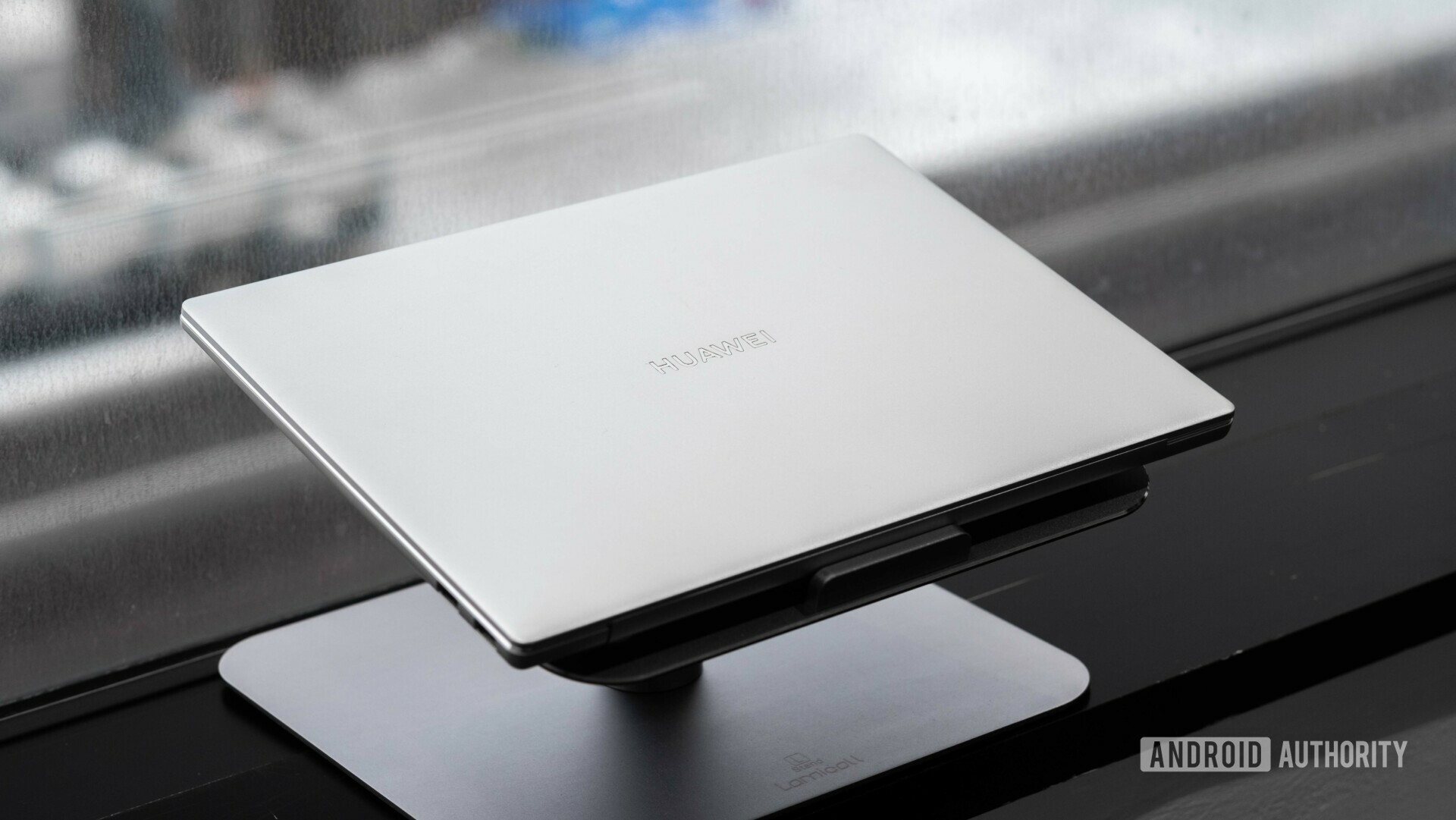
Huawei MateBook 14 top

Huawei has endured a rather tough time as a result of the U.S. trade ban against it, as major partners around the world either cancel or assess their relationship with the brand. The firm has been able to weather the storm and launch devices anyway, but it looks like we’ve got our first canceled product as a result of the ban.

Huawei consumer CEO Richard Yu told CNBC that an upcoming MateBook laptop has been put on indefinite hold due to the situation. “We cannot supply the PC,” he was quoted as saying.

Yu said the length of the trade ban would determine whether the company would be able to launch the new MateBook. But he added that it wouldn’t be launched if Huawei was on the so-called Entity List for a long period of time.

Alternatives to Intel, Microsoft?

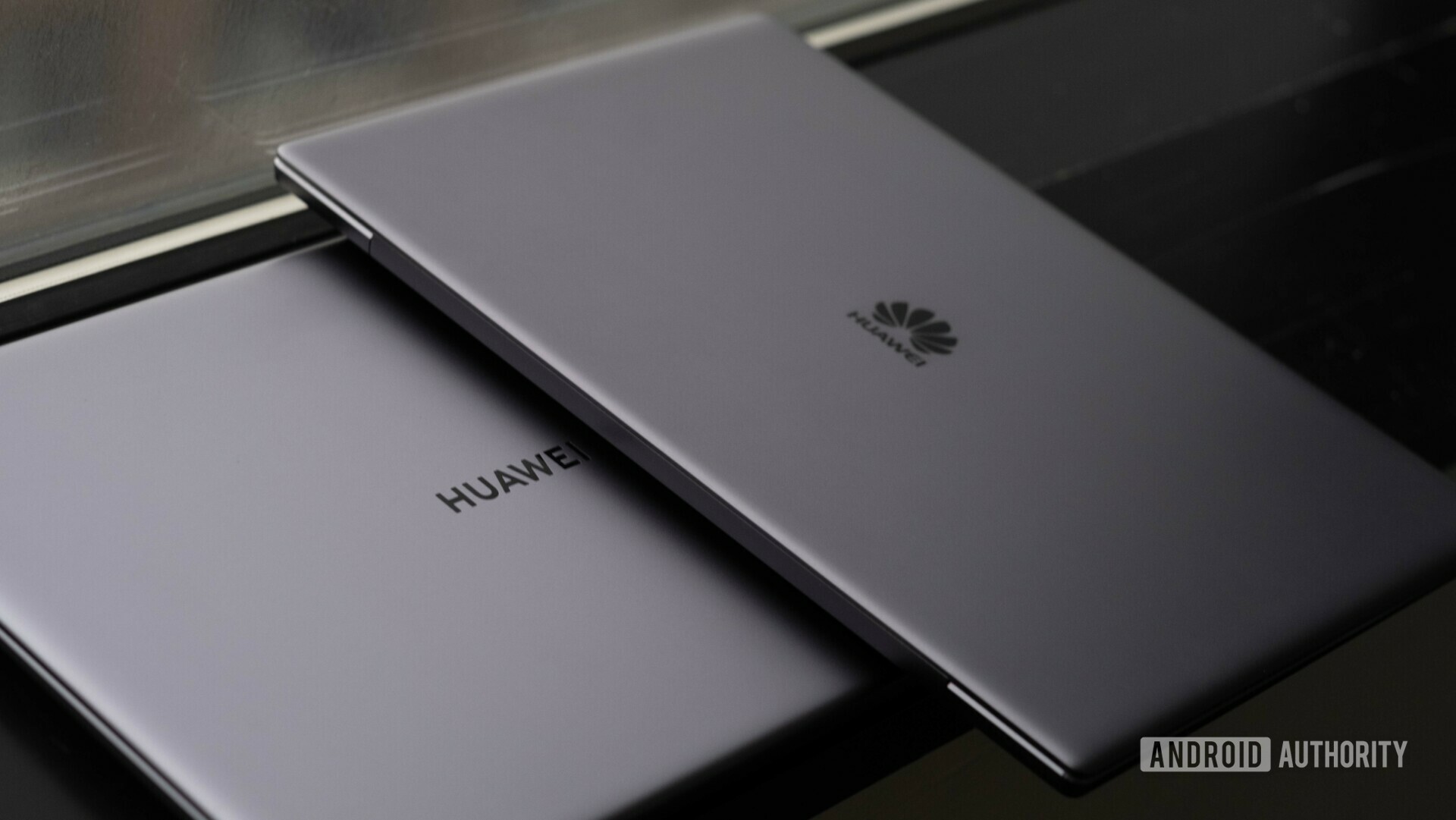
Huawei MateBook X Pro 2019 vs Matebook X Pro 2019

The MateBook line is heavily reliant on U.S. companies, as Huawei uses Intel’s processors and Microsoft’s Windows 10 as the operating system of choice. One possibility is for Huawei to switch to AMD‘s processors, having previously used them in some laptops. However, as a U.S. company, AMD is almost certainly subjected to the trade ban. Huawei will also need to find alternatives to other U.S. laptop parts.

Editor's Pick

As for the operating system conundrum, it’s possible the company could switch to Linux or an Android-derived OS in lieu of Windows. But there are no guarantee users will buy a MateBook without Windows.

Huawei’s smartphone business isn’t quite as hard hit as the U.S. trade ban, as the company designs much of the silicon in these devices (including the modems and Kirin processors). Still, the new MateBook’s scuppered launch underscores the critical situation Huawei finds itself in right now.

Would you buy a MateBook without Windows? Let us know in the comments!

NEXT: Smartphone tripods — Everything you need to know

Let's block ads! (Why?)


https://www.androidauthority.com/huawei-matebook-cancel-launch-997176/

2019-06-12 14:08:46Z
52780313038791

Watch AMD's E3 keynote in just 15 minutes - Engadget

Sponsored Links

If you want to get up to speed with AMD's announcements at this year's E3 but don't have time to sit through the entire presentation, step this way. We've edited out all the fluff to give you the main highlights and talking points, all packaged neatly into a 15 minute video.

You'll get the scoop on the new Radeon 5700 XT and the RX 5700, plus a load of side-by-side demos showing off its graphics prowess against the competition. Find out more about the NAVI GPU family, learn about new features for game developers, including Fidelity FX and AMD Radeon Image Sharpening, and buckle up for the big one: AMD announces the world's first 16-core gaming processor, the AMD Ryzen 3950X. Plus you'll get a few sneak peeks at major forthcoming gaming titles, and be among the first to hear about AMD's partnership with Microsoft that'll get you in front of Gears 5 before everyone else.

Catch up on all the latest news from E3 2019 here!

Let's block ads! (Why?)


https://www.engadget.com/2019/06/12/watch-amds-e3-presentation-in-just-15-minutes/

2019-06-12 13:58:06Z
52780311528225

The Pixel 4 might have an exciting new feature that’s not available on any iPhone or Android - BGR

Google often announces technology innovations that aren’t ready to be turned into commercial products, prompting us to wonder whether they’re just vaporware. But that doesn’t mean development for said projects stops, and the Pixel 4 might prove exactly that. A couple of rumors claim the Pixel 4 will have a chip unlike anything available on iPhone or other Android flagship, a new type of tech that Google first unveiled back in 2015.

Called Project Soli, the chip was unveiled all the way back at Google I/O 2015, alongside several other projects coming from Google’s ATAP group.

What you need to know about it is that Soli uses radar to read the fine movements of one’s fingers, turning those gestures into actions on the screen of a phone, for example. In other words, the Pixel 4 might pack this Google-made chip to let you interact with the phone without touching the screen or any buttons.

That’s an exciting technology for the future of mobile phones, one that could help manufacturers create those button-less devices that are in the pipeline. A few weeks ago, we had a Pixel 4 rumor that said one of Google’s prototypes lacked any physical buttons, packing capacitive sensors into the sides where the real buttons would go. More recent leaks, however, showed that the phone would have buttons on the side.

Getting back to Project Soli, we’ll also remind you that in early 2019 we told you that the FCC allowed Google to operate its Soli chips at higher power levels. At the time, we had no idea what Google was working on and speculated that Project Soli chips might pave the way for computers with Minority Report-like technology.

The reason why this Pixel 4 Project Soli rumor is so exciting is because we have more than a source mentioning it. First, 9to5Google reported that the Soli radar chip is integrated into the Pixel 4, without explaining what it does.

But then xda-developers came forward with a discovery in the most recent beta that seems to reinforce the Soli rumor.

Google included two new gestures in Android Q called Skip and Silence, although they’re not functional on any devices. It’s pretty clear they refer to media playback, which would be a cool use for Soli. After all, Google imagined exactly that kind of interaction with Soli devices back in 2015 when it released the video at the end of this post.

The report further explains that the new gestures need a new Aware sensor that’s not defined on any of the current Pixel devices.

With all that in mind, it sure looks like the Pixel 4 will have a radar-based chip inside that will support gestures unlike anything seen on competing devices. The other day I explained how Google approach about making Pixel phones has been consistently wrong so far, with Google often having to follow the moves of the iPhone. I also said that the Pixel 4 might be Google’s chance to step out of the iPhone’s shadow with some sort of risky decisions. Soli would just about qualify — check out the initial Soli demos in the clip below:

Let's block ads! (Why?)


https://bgr.com/2019/06/12/pixel-4-vs-iphone-11-leak-says-soli-radar-gestures-are-on-the-way/

2019-06-12 11:31:00Z
52780311827160

Spotify mimics the radio with a news and music playlist for drivers - The Verge

Spotify’s launching a new playlist called Your Daily Drive that will incorporate news podcasts. Starting today, US users will be able to listen to music they already enjoy, alongside new music recommendations, with some news podcast content sprinkled in. Anyone can access the playlist, regardless of whether they’re driving.

The Wall Street Journal, NPR, and Public Radio International will provide the news audio clips. News and music will update throughout the day, unlike the platform’s other popular playlists. For instance, Discover Weekly only updates once a week, and other personalized playlists like Your Daily Mix only update once a day.

This new playlist joins other Spotify lists in promoting podcasts. The Verge reported earlier this month that Spotify is testing five different podcast-only playlists that are human-curated. While those playlists are only in the testing phase for five percent of users in various countries, Your Daily Drive is available to all US users.

Today’s playlist also comes a month after Spotify announced its first hardware project — Car Thing — that’s designed to gather data about how people consume audio in the car. Spotify’s auto audio ambitions mean the company can’t just be good at music. This playlist is closer to the radio formula, where news enters the mix of songs every so often — though the new format doesn’t yet include weather and traffic, the two things most relevant to drivers.

Let's block ads! (Why?)


https://www.theverge.com/2019/6/12/18662060/spotify-your-daily-drive-playlist-update

2019-06-12 10:00:00Z
52780313229546

LG launches the first IPS gaming displays with 1ms response time - Engadget

Sponsored Links

LG

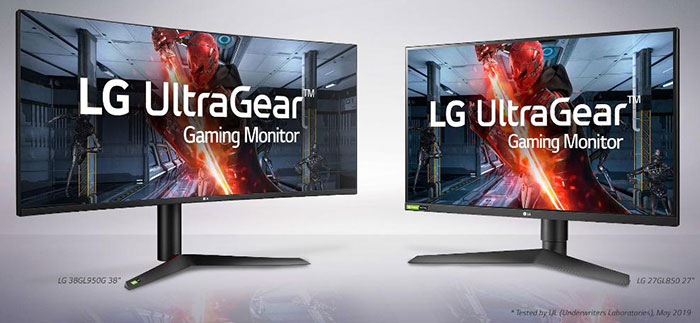
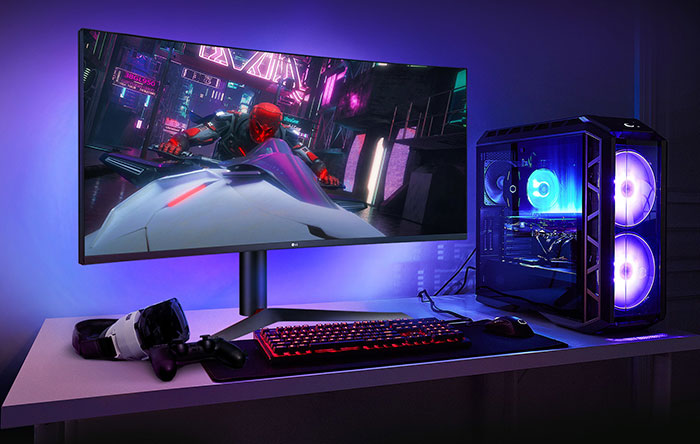
LG has unveiled its latest gaming offering: two new monitors with a blazing one-millisecond response time. The monitors are part of LG's UltraGear family and are the first in the world to offer such a fast IPS display, which helps bring IPS (In-Plane Switching) up to a closer standard as TN (Twisted Nematic) devices on the LCD monitor landscape.

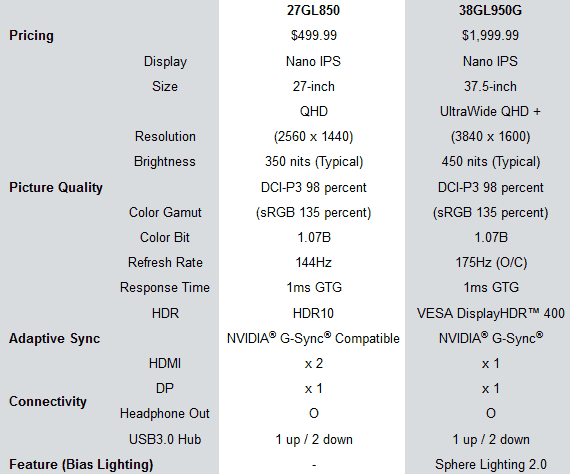
The larger model comes with a curved, wide-angle monitor and 37.5-inch screen, a resolution of 3840 x 1600 and a brightness of 450 nits. The second model has a smaller 27-inch display, a resolution of 2560 x 1440 and a brightness of 350 nits. These specs aside, their main headline is their smooth motion. As well as the one-millisecond response time, both boast high refresh rates: 144 Hz for the smaller model and up to 175 Hz for the larger one. They're also both compatible with Nvidia's motion-smoothing G-SYNC technology.

No word yet on pricing, although they probably won't be cheap. LG is currently exhibiting both the larger (model 38GL950G) and smaller (model 27GL850) monitors at Nvidia's space at E3, and says that pre-orders for the 27-inch monitor will open on July 1st in the US, with availability in Europe later this year.

Catch up on all the latest news from E3 2019 here!

Let's block ads! (Why?)


https://www.engadget.com/2019/06/12/lg-first-ips-gaming-display-1ms-response-time-monitor/

2019-06-12 09:25:10Z
52780313033537

LG launches UltraGear Nano IPS 1ms GtG gaming monitors - HEXUS

LG has launched a pair of gaming monitors into its UltraGear range. A particular highlight of these new gaming monitors is that they are claimed to be the "world's first IPS 1ms gaming monitors". Additionally, they have attractively high refresh rates, Nvidia G-Sync, excellent colour reproduction (DCI-P3 98 per cent) and high resolutions. As gaming monitors, both new models feature gamer-specific settings such as; Dynamic Action Sync mode, Black Stabilizer, and Crosshair which can be especially useful in FPS games.

LG 38GL950G

The 38GL950G is a curved 38-inch Nano IPS monitor with a resolution of 3840 x 1600 pixels (AKA UltraWide QHD+) and 21:9 aspect ratio. As per the headline, this is a 1ms GtG monitor and it sports impressive refresh rates too - up to 175Hz overclocked. On the topic of refresh rates this is a G-Sync certified monitor with the necessary built-in Nvidia hardware.

Deepening your immersion, the curved screen features a "virtually borderless design" plus upgraded Sphere Lighting 2.0 – an array of RGB lights located at the rear of the monitor that heighten the ambience of when gaming by changing colour in accordance with the on-screen action.

Last but not least the 38GL950G is VESA DisplayHDR 400 certified with a max brightness of 450nits. This 38-inch monitor sounds a bit special but costs a pretty penny - its MSRP is US$1999 with pre-orders starting from 1st July.

LG 27GL850

The 27GL850 is based around a flat 27-inch Nano IPS panel with a resolution of 2560 x 1440 pixels (QHD). While it offers the same colour gamut, bit depth, and fast response time other aspects are toned down somewhat. TO start with this is an Nvidia G-Sync compatible display so I think it is 'just' an Adaptive Sync monitor that has passed Nvidia's tests. It sports a top refresh rate of 144Hz, HDR10 compatibility, but a peak brightness of only 350nits.

Hopefully the price tag makes the above mentioned spec cuts palatable as the LG 27GL850 has an MSRP of US$499. Like its bigger brother it will roll out next month with pre-orders starting from 1st July.

Both the LG 38GL950G and 27GL850 are currently being demonstrated at the Nvidia media space at E3 2019.

Let's block ads! (Why?)


https://hexus.net/tech/news/monitors/131636-lg-launches-ultragear-nano-ips-1ms-gtg-gaming-monitors/

2019-06-12 09:11:00Z
52780313033537