Kamis, 06 Juni 2019

Google Stadia Price, Launch Window, Launch Games Lineup Revealed - IGN

Google Stadia Pro subscription details and more revealed.

Google has unveiled more details about its Stadia streaming platform. And while we don't have a firm Google Stadia release date just yet, we know a lot more than we did after the Google Stadia reveal event, including how much it will cost at launch, what month it's set to debut in, and what games players can expect from the streaming service.

As revealed during the Google Stadia Connect, Stadia will launch in November 2019, exclusively via the Stadia Founder's Edition bundle, available for preorder on the Google Store. Read on for everything you'll need to know about Stadia Pro, the Stadia controller, what games you'll be able to buy and play, and more.

Exit Theatre Mode

Google Stadia Price, Launch Window

Stadia will be available in November, and the only way at launch to access the cloud-based service will be via the Founder's Edition. Google will reveal more details in the future about how players can access Stadia in 2020 beyond the Founder's Edition.

Stadia will be available in 14 countries via the Founder's Edition: the U.S., Canada, UK, Ireland, France, Germany, Italy, Spain, Netherlands, Belgium, Denmark, Sweden, Norway, and Finland. More regions will be added in 2020, according to Google.

Where to Play Google Stadia

Google Stadia will be available at launch on the following platforms:

  • Desktop (via Chrome browser)
  • TVs (with a Chromecast plugged in)
  • Tablets
  • Google Phones (Pixel 3 and Pixel 3a)

Google Stadia Founder's Edition Details

Stadia Founder's Edition Controller

Stadia Founder's Edition Controller

Currently available for preorder, the Founder's Edition will cost $129.99 and includes the following:

  • Limited-edition Night Blue controller (check out a photo above)
  • Chromecast Ultra (normally retails for $69.99)
  • Three-month Stadia Pro subscription
  • First chance to claim a Stadia Name
  • One 3-month Buddy Pass to give Stadia Pro to a friend

Google Stadia Pro Subscription Details

Stadia Pro is Google's subscription service that players can access as part of Stadia for deals on games, free games, and better streaming capabilities. While the Founder's Edition comes bundled with three months of it (and three months for another friend to subscribe with), it will normally cost $9.99 per month.

Most notably, Stadia Pro will be required to play with up to 4K/60 fps/HDR and 5.1 surround sound capabilities for your Stadia games. (Stadia Base, available in 2020, will let you stream games only up to 1080p/60 fps.)

In addition to the stream quality, Stadia Pro also gives access to exclusive discounts on games for purchase, as well as free games, similar to Xbox Live or PlayStation Plus, that will be made available at a "regular cadence." Those free games will be accessible so long as your Pro subscription is active, similar to PlayStation Plus' free games.

Exit Theatre Mode

Additionally, for a limited time, Stadia Pro will give players full access to Destiny 2, including the base game, all previously released add-ons, and the new expansion and annual pass. Players will even be able to transfer their Destiny 2 Guardian from other platforms (currently, PC and Xbox One are confirmed to support this feature.)

Stadia Pro has all the benefits of Stadia Base as well, which will be an available way to play in 2020. As mentioned previously, Stadia Base supports up to 1080p/ 60 fps streaming with stereo sound. Players can purchase and indefinitely keep any games available via Stadia. Stadia Base, and therefore Stadia Pro, will be available to play in a Chrome browser on any computer, or on Pixel 3 and 3a phones, with plans to expand to other phones over time.

Google Stadia Base

Google Stadia will offer, as mentioned above, Google Stadia Base beginning in 2020. With Stadia Base, players will simply be able to buy games via Stadia and play them on Google's cloud-gaming platform with the following features:

  • Up to 1080p/60fps with stereo sound
  • Buy and keep the games you want
  • Play in a Chrome browser on any computer or on your Pixel 3 or 3a phone (expanding to other phones over time)

All Stadia Base features are, of course, available to Stadia Pro subscribers.

Google Stadia Launch Window Games, Partners

Google has announced over 20 publisher and developer partners who will be putting their games on the Stadia platform. Check out the full list below, and head over to our story on Google Stadia's launch window games for more details about some of the newly revealed titles.

Exit Theatre Mode
  • Bandai Namco - Dragon Ball Xenoverse 2
  • Bethesda - DOOM Eternal, DOOM 2016, Rage 2, The Elder Scrolls Online, Wolfenstein: Youngblood
  • Bungie - Destiny 2
  • Capcom
  • Coatsink - Get Packed
  • Codemasters - GRID
  • Deep Silver - Metro Exodus
  • Drool-Thumper
  • Electronic Arts
  • Giants Software - Farming Simulator 19
  • Larian Studios - Baldur’s Gate 3
  • nWay Games - Power Rangers: Battle for the Grid
  • Rockstar
  • Sega - Football Manager
  • SNK - Samurai Shodown
  • Square Enix - Final Fantasy XV - Tomb Raider Definitive Edition, Rise of the Tomb Raider, Shadow of the Tomb Raider
  • 2K - N BA 2K, Borderlands 3
  • Tequila Works - Gylt
  • Warner Bros - Mortal Kombat 11
  • THQ - Darksiders Genesis
  • Ubisoft - Assassin’s Creed Odyssey, Just Dance, Tom Clancy’s Ghost Recon Breakpoint, Tom Clancy’s The Division 2, Trials Rising, The Crew 2
Exit Theatre Mode

Ubisoft has, of course, previously been a partner with Google via last year's Project Stream, which allowed players to play Assassin's Creed Odyssey in Chrome browsers. Google's Phil Harrison actually spoke to IGN about how Assassin's Creed Odyssey is indicative of Google Stadia's third-party plans. And while not listed among Google's launch window games, Google does have its own Stadia first-party studio, and Google's Phil Harrison explained why first-party games will be key to Google Stadia.

“Ubisoft is bringing several fantastic gaming worlds to Stadia at launch and we cannot wait to see players experience them on this game-changing cloud technology,” said Yves Guillemot, co-founder & CEO of Ubisoft in a statement provided to IGN. “Starting later this year, Stadia will bring players the possibility to share and enjoy even more memorable gaming moments wherever they choose to play.”

IGN went hands-on with Stadia at GDC 2019 earlier this year.

Google Stadia Controller Details

While a Stadia controller will be available as part of the Founder's edition in a limited edition color, players can also purchase additional controllers for $69 each. Announced colors of the controller include Just Black, Clearly White, and Wasabi.

As previously revealed by Google Stadia, the Stadia controller uses built-in WiFi to connect directly to games running in Google's data centers, and features buttons to capture footage and to access Google Assistant.  The controller features a 3.5mm headset jack, a USB-C port for charging the controller's internal Li-lon battery, wired gameplay, and accessories.

While we didn't get to play Stadia games with it, we did go hands-on with Google Stadia's controller to get a feel for what players can expect from it.

Google has previously revealed the internet speed requirements recommended to play Stadia at both Stadia Pro and Stadia Base tiers. Google's Phil Harrison also previously spoke to IGN about how there never was a Google Stadia console, but instead Stadia was always meant to be a streaming platform.

The rest of the industry has not remained quiet since Google Stadia's launch about cloud gaming. PlayStation's CEO Jim Ryan spoke about the industry's overall shift toward cloud gaming and what that means for consoles.

Stay tuned to IGN for much more on Google Stadia as we approach its launch, and check out our Google Stadia Wiki for details on tech specs, comparisons to next gen consoles, and much more..

Exit Theatre Mode

Jonathon Dornbush is IGN's News Editor and host of Beyond! Talk to him on Twitter @jmdornbush.

Let's block ads! (Why?)


https://www.ign.com/articles/2019/06/06/google-stadia-price-launch-window-launch-games-lineup-revealed

2019-06-06 17:58:00Z
52780310040227

Luigi's Mansion 3, Link's Awakening, Marvel Ultimate Alliance 3 playable at E3 2019 - VG247

By Stephany Nunneley, Thursday, 6 June 2019 14:06 GMT

Nintendo has solidified its plans for E3 2019 and provided additional information on games playable on the show floor.

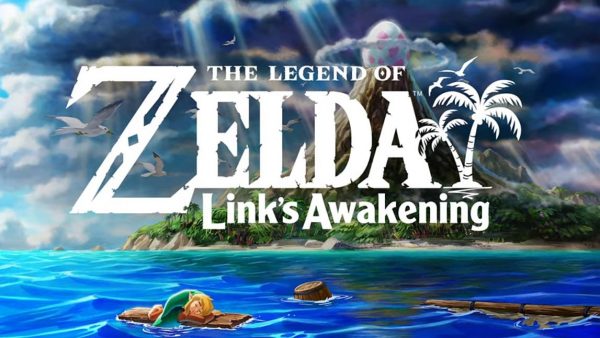
E3 2019 attendees will be able to play Switch titles Pokemon Sword and Shield, Luigi’s Mansion 3, The Legend of Zelda: Link’s Awakening and Marvel Ultimate Alliance 3: The Black Order, in addition to various others on the show floor.

This pretty much confirms we’ll hear more about these games during the E3 Nintendo Direct.

As previously stated, on June 11 Nintendo will host its Nintendo Direct presentation, followed by Nintendo Treehouse: Live presentations throughout the week. Those interested in indies should tune in for Treehouse: Live on Thursday, June 13.

Alongside news and announcements Nintendo will host multiple game tournaments.

Those unable to attend E3 2019 can head to a participating Best Buy for early access events. Available at 80 locations, on Wednesday, June 12, and from noon-5 pm local time on Saturday, June 15, you can demo Marvel Ultimate Alliance 3. Hit up the link to see if your location is listed.

Finally, the company will host a Nintendo eShop Sale. You’ll be able to save some coin on select digital 3DS and Switch games June 11-18. The full list of discounted games will be available here.

Nintendo Direct will begin at 9am PDT, 12pm EDT, 5pm UK, 6pm CEST on June 6.  The presentation will focus entirely on software and games scheduled to release in 2019.

E3 2019 is upon us, so be sure to bookmark our full E3 2019 schedule for easy access.

Sometimes we include links to online retail stores. If you click on one and make a purchase we may receive a small commission. For more information, go here.

Let's block ads! (Why?)


https://www.vg247.com/2019/06/06/lugis-mansion-3-links-awakening-marvel-ua3-pokemon/

2019-06-06 13:06:19Z
52780308614718

Nintendo expands E3 stream plans, Zelda: Link's Awakening will be playable - Destructoid

Along with Pokemon Sword & Shield, Luigi's Mansion 3, Ultimate Alliance 3, 'and more'

Before today, Nintendo just had one event confirmed in terms of E3 2019 streams: Tuesday at 12PM ET. Today they're expanding things a bit with three more streams.

Once again a Treehouse Live segment will follow up the aforementioned Direct, which will, as in previous years, likely further detail the games revealed at E3 and deliver some smaller reveals of their own (typically smaller titles and things like amiibo figures or add-ons are perfect Treehouse material).

Following that, Treehouse Live will return on Wednesday June 12 at 12PM ET for another stream. Then on Thursday June 13, there's yet another Treehouse Live segment, this time focusing on "Indie Day." On the showfloor, Pokemon Sword & Shield are confirmed to be playable, as well as Luigi's Mansion 3, Zelda: Link's Awakening (Switch), Marvel Ultimate Alliance 3, "and more."

Again, if you haven't watched a Treehouse stream before, it's perfect background material. They typically chew through games in 30 minute increments, often times with developers on site explaining a live playthrough, confirm some tidbit of info at the end, then take a short break to start the process all over again.

You are logged out. Login | Sign up

Filed under...

Let's block ads! (Why?)


https://www.destructoid.com/nintendo-expands-e3-stream-plans-zelda-link-s-awakening-will-be-playable-556163.phtml

2019-06-06 12:16:00Z
52780308614718

Microsoft dismisses new Windows RDP 'bug' as a feature - Naked Security

Researchers have found an unexpected behavior in a Windows feature designed to protect remote sessions that could allow attackers to take control of them.

The issue, discovered by Joe Tammariello at the CERT Coordination Center (CERT) at Carnegie Mellon’s Software Engineering Institute, is documented as CVE-2019-9510. It stems from Network Level Authentication (NLA), which is a feature that you can use to protect Windows installations that have the Remote Desktop Protocol (RDP) enabled. NLA stops anyone from remotely logging into the Windows computer by requiring them to authenticate first.

Starting with Windows 10 release 1803 in April 2019, and with Windows Server 2019, Microsoft changed the way NLA works. Now, the authentication mechanism caches the client’s login credentials on the RDP host so that it can quickly log the client in again if it loses connectivity. The change enables an attacker to circumvent a Windows lock screen, warns CERT/CC, which disclosed the issue, in an advisory.

Let’s say you remotely log in to a Windows box using RDP. Then, you lock that remote desktop to stop an attacker from accessing it from your machine while you leave the room.

The attacker could interrupt the network connection between the local machine and the remote Windows box and then reestablish it, by unplugging the network cable and plugging it in again (or disabling and re-enabling Wi-Fi).

That’s where the unexpected behavior kicks in, according to the advisory:

Because of this vulnerability, the reconnected RDP session is restored to a logged-in desktop rather than the login screen. This means that the remote system unlocks without requiring any credentials to be manually entered.

The behavior also bypasses multi-factor authentication (MFA) systems that integrate with the Windows login screen, explains the advisory. Duo Security admits that its MFA products are affected, adding that the issue isn’t its fault:

By forcing the use of cached credentials, Microsoft has broken functionality used by credential providers to add resilience to this workflow.

However, rival MFA firm Silverfort says that it isn’t affected because it doesn’t rely on the Windows lock screen:

Due to the way our products [sic] operates, we are not affected by this vulnerability. We use a unique technology which allows us to enforce MFA on top of the authentication protocol itself (e.g. Kerberos, NTLM, LDAP) without relying on Windows login screen.

Microsoft also responded to the issue, explaining that it’s a feature, not a bug. It told CERT:

After investigating this scenario, we have determined that this behavior does not meet the Microsoft Security Servicing Criteria for Windows. What you are observing is Windows Server 2019 honoring Network Level Authentication (NLA). Network Level Authentication requires user creds to allow connection to proceed in the earliest phase of connection. Those same creds are used logging the user into a session (or reconnecting). As long as it is connected, the client will cache the credentials used for connecting and reuse them when it needs to auto-reconnect (so it can bypass NLA).

Unconvinced, Tammariello’s colleague Will Dormann still thinks you should work around it:

Given that Microsoft isn’t fixing this any time soon, you should use the local machine’s lock screen rather than relying on the remote box’s lock, says the CERT advisory. You can also disconnect RDP sessions when you go and visit the loo. Yes, it’s annoying, we know.

Responding to a user complaint, a Microsoft Technet moderator also said it was possible to disable automatic reconnection on the RDP host via group policy, and provided instructions.

If the phrase ‘Network Level Authentication’ rings a bell, it’s because Microsoft has recommended this as a protection measure against exploitation of CVE-2019-07-08, nicknamed BlueKeep, the serious exploit affecting pre-Windows 8 systems, which the NSA, amongst many others, is now begging people to patch.

This issue doesn’t mean that you shouldn’t use NLA to protect your pre-Windows 10 boxes. For one thing, this unexpected behavior only exists on Windows 10 and Windows Server 2019. BlueKeep doesn’t affect these editions of the Windows OS.

Let's block ads! (Why?)


https://nakedsecurity.sophos.com/2019/06/06/microsoft-dismisses-new-windows-rdp-bug-as-a-feature/

2019-06-06 11:56:00Z
52780309530041

iPhone X Diary: I never thought I’d miss one tiny feature so much! - 9to5Mac

I wrote recently about my iPhone X falling victim to a swollen battery, and Apple lending me an iPhone 8 while my own phone was repaired or replaced.

Yesterday was my first chance to get to the Regent Street store to pick up my phone and return the loaner. Given the extent of the damage, I wasn’t expecting a repair to be possible but, impressively, it was. Apple told me it had been fixed, and checking the serial number confirmed it.

The iPhone 8 is a very nice phone …

NordVPN

As I said last time, the screen differences seem to me to be overplayed.

So, in a couple of days of use, which of the differences has really stood out? I’ll start with one difference that really hasn’t: OLED versus LCD displays. To be honest, I think this has been massively overblown. Apple’s LCD screens have always been excellent, and the iPhone 8 one is no exception. There hasn’t been a single moment when I’ve looked at the iPhone 8 screen and missed the iPhone X one – or even noticed any difference at all.

I mentioned two differences I noticed right away: a small one and a big one. The small one was the second rear camera, while the big one was Face ID.

There is one iPhone X feature I miss massively – and that’s Face ID. To me, the difference is night-and-day. Somewhat for unlocking the phone. Swiping up on the iPhone X can be done very casually, and Face ID unlocks instantly; having to position a thumb on the Touch ID button feels clunkier in comparison.

But much more for apps. I use Face ID with my banking apps, for example, and on the iPhone X I just open the app, briefly see the Face ID unlock confirmation and I’m in. It’s absolutely seamless, and the feeling is as if there’s no security step at all.

Tap to Wake

But it turned out there was another really small-sounding difference that I missed way more than I expected: Tap to Wake. I cannot tell you how many times I tried to switch on the iPhone 8 by tapping the screen.

Of course, Tap to Wake needs Face ID anyway, but it was the combination I missed rather than just Face ID itself.

Another thing was storage. While it initially looked like I was only using 56GB, that turned out not to be the case. Once I started re-downloading my offline Spotify tracks, the 64GB storage of the loaner was soon full. (I use Apple Music as my primary music service, and Spotify for tango music – the latter has a much better selection, and it stops tango messing up my Apple Music recommendations.)

Diagnostics check on loaner

Interestingly, Apple carried out the same, thorough diagnostics check on the loaner phone I returned as it did on my own phone. I guess partly to ensure there’s no hidden damage, but I suspect it’s also to stop people swapping out a loaner with a counterfeit phone, or replacing genuine internal parts with third-party ones.

I didn’t mind the time it took, as I was in any case waiting for my own phone to restore on the store Wi-Fi, but it’s interesting that Apple sees this step as a necessary precaution.

One feature request

The repair meant that I needed to restore my phone twice from iCloud backup: once to the loaner phone, and again when mine was returned. In both cases, I was heading out straight afterwards, so restoring from iTunes wasn’t practical.

An iCloud restore is, of course, quite slow. There’s the initial part of the process, where you see only a progress bar and can’t use the phone for anything else, and then it becomes usable as it continues to redownload your installed apps. That side of things can take a long time.

In theory, an iCloud restore allows you to prioritize the apps you want downloaded first: you just tap on them. In practice, however, this doesn’t work well – it continues to simultaneously download multiple apps, and on slow wifi that can be annoyingly slow.

I needed fairly immediate access to Facebook Messenger to send a message (Messenger is the new email for many people …), but had to wait a frustratingly long time to get it. What I’d like is the option to maybe long-press an app and have iCloud pause everything else in order to download only that app, resuming the rest of the restore once it’s done.

MacStadium Private Cloud for Mac

Check out 9to5Mac on YouTube for more Apple news:

Let's block ads! (Why?)


https://9to5mac.com/2019/06/06/iphone-x-versus-iphone-8/

2019-06-06 11:45:00Z
52780307176121

BlueKeep Windows vulnerability is so serious, even the NSA wants you to patch your system - BetaNews

NSA advisory

It's around three weeks since Microsoft first urged Windows users to patch their systems against the BlueKeep (CVE-2019-0708) vulnerability. Concerned that not enough people were taking notice, the company then issued a further warning stressing the importance of installing a patch.

Now the NSA has got involved, joining Microsoft in begging users to secure their Windows XP and Windows 7 computers. The agency says that is "concerned that malicious cyber actors will use the vulnerability in ransomware and exploit kits containing other known exploits, increasing capabilities against other unpatched systems".

See also:

Both Microsoft and the NSA warn that the exploit is "wormable", and both are eager to avoid a repeat of the WannaCry worm that affected systems around the globe back in 2017. The NSA's warning urges people to "patch Remote Desktop Services on legacy versions of Windows" -- specifically Windows 7, Windows XP, Server 2003 and 2008.

The agency echoes the concerns of the Windows-maker, saying "although Microsoft has issued a patch, potentially millions of machines are still vulnerable".

It goes on to say:

This is the type of vulnerability that malicious cyber actors frequently exploit through the use of software code that specifically targets the vulnerability. For example, the vulnerability could be exploited to conduct denial of service attacks. It is likely only a matter of time before remote exploitation code is widely available for this vulnerability. NSA is concerned that malicious cyber actors will use the vulnerability in ransomware and exploit kits containing other known exploits, increasing capabilities against other unpatched systems.

NSA urges everyone to invest the time and resources to know your network and run supported operating systems with the latest patches. Please refer to our advisory for additional information. This is critical not just for NSA's protection of National Security Systems but for all networks.

In its security advisory, the NSA also provides tips that people can follow to secure their systems:

  • Block TCP Port 3389 at your firewalls, especially any perimeter firewalls exposed to the internet. This port is used in RDP protocol and will block attempts to establish a connection.
  • Enable Network Level Authentication. This security improvement requires attackers to have valid credentials to perform remote code authentication.
  • Disable remote Desktop Services if they are not required. Disabling unused and unneeded services helps reduce exposure to security vulnerabilities overall and is a best practice even without the BlueKeep threat.

Let's block ads! (Why?)


https://betanews.com/2019/06/06/bluekeep-security-warning-nsa/

2019-06-06 11:10:56Z
52780309530041

Google’s more useful SOS alerts will navigate you away from danger - The Verge

Two years after their original introduction, Google is updating its SOS Alerts with more real-time information about areas affected by natural disasters, and new navigation warnings in Google Maps to help route you around danger. The changes will also show you more detailed visual information about earthquakes, hurricanes, and floods, with a visual overlay to show the impacted areas.

For hurricanes, Google will attempt to forecast their route, and will display a crisis notification card in Google Maps if you’re near an affected area. Flood forecasts will show an overlay on a map of affected areas, along with information about severity. Finally, earthquakes will also get a crisis card, which will show you its epicenter, magnitude, and areas affected.

Google’s SOS Alerts are a way to provide essential information quickly in the event of a natural disaster. If you search for a relevant term, then Google will surface a summary of relevant news, emergency phone numbers, safety tips, and Twitter updates. In the most serious cases, Google will send out a push alert to users in the affected area.

The new visual SOS Alerts will be rolling out to users in the coming weeks, but supported platforms and regions vary between the different natural disasters.

The Google Maps navigation warnings and earthquake indicators will both be available globally. Earthquakes will be visible on Android, iOS, desktop, and the mobile web, while the navigation warnings will be on iOS and Android only. Meanwhile, flood visualizations will be supported on Android, desktop, and the mobile web, but they’ll only be available in India where the risk of drowning in a flood is particularly high. Finally, hurricane visual forecasts will be available across all platforms in the US, Mexico, Caribbean, Western Europe, Japan, Taiwan, China, Philippines, Vietnam, Thailand, and South Korea.

Let's block ads! (Why?)


https://www.theverge.com/2019/6/6/18655027/google-sos-alerts-maps-floods-earthquakes-hurricanes-ios-android

2019-06-06 10:27:26Z
52780309329558