E3 2019 may be just around the corner, but for Pokemon fans, the most exciting news arrived today during a special Pokemon Direct. Unlike the broader E3 Direct set for next week, which will show off a number of Switch games releasing in 2019, the presentation was focus exclusively on the highly anticipated Pokemon Sword and Shield. During the Direct, Nintendo confirmed a release date, showed off new Pokemon, and detailed exciting new multiplayer features.
If you missed it, don't despair, you can rewatch the entire stream using the vide below. It's roughly 15 minutes long and packed with new information, so get yourself some snacks and settle in. We've also included all the biggest news that came out of the stream for you to read below. Once you've made your way to the end of this article, you'll be an expert on everything that has happened with Pokemon Sword and Shield so far. .
Pokemon Sword And Shield Release Date Confirmed
During the Nintendo Direct, Pokemon developer Game Freak confirmed that Pokemon Sword / Shield's release dates as on November 15. Better yet, it's a global release date, so no one will be feeling left out when Poke-fever hits later this year.
Pokemon Sword And Shield's Awesome New Legendaries
Nintendo introduced us to Pokemon Sword and Shield's new Legendary Pokemon. As you might expect, the two new Legendaries embody the "Sword" and "Shield" titles, with Zamazenta having a shield-like design and Zacian holding a sword-like item in its mouth.
Pokemon Sword / Shield: Characters And Story Details Revealed
Nintendo and The Pokémon Company will reveal all-new details about the next game in the franchise, Pokémon Sword and Pokémon Shield for Switch, in a new Pokémon Direct presentation on Wednesday, June 5. The Nintendo Direct-style presentation will be streamed at 9 a.m. ET/6 a.m. PT, and include “roughly 15 minutes of new information” on Pokémon Sword and Shield.
Pokémon Sword and Shield is set in the new, U.K.-inspired Galar region and will introduce eighth-generation Pokémon to the series. Those new Pokémon include Sword and Shield’s starters, Grookey, Scorbunny, and Sobble, who will be part of a brand-new story.
Beyond that, not much has been revealed about the next Pokémon games, but hopefully we’ll learn more about the new starters, moves, trainers, and evolutions, and get an official release date in today’s Pokémon Direct.
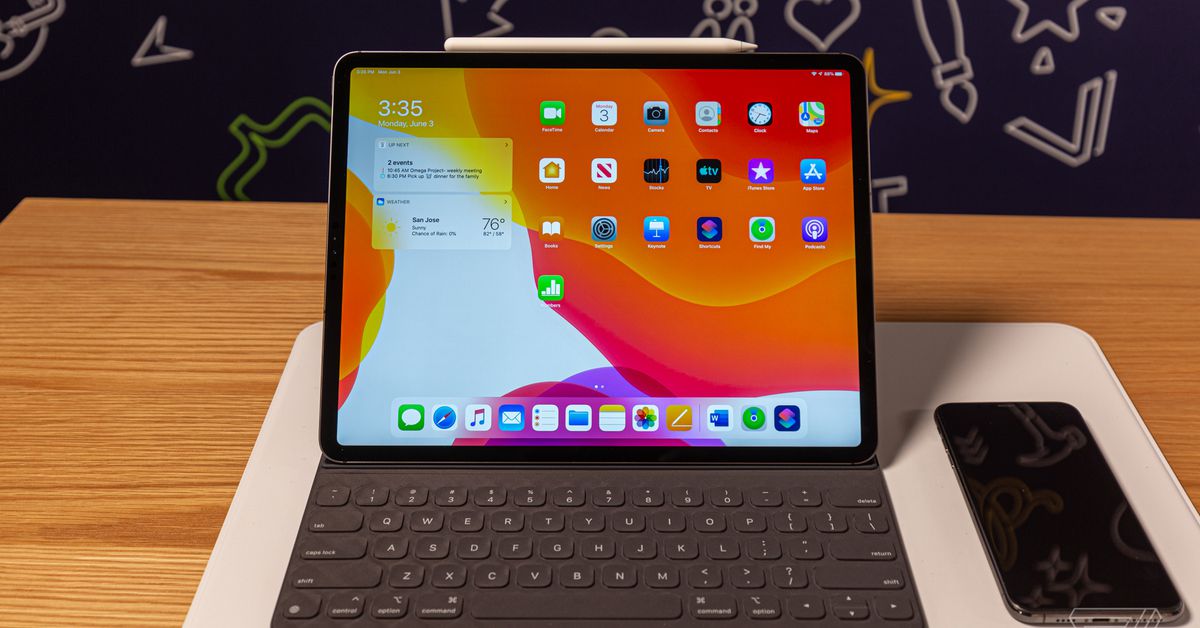
iPadOS adds some key features, including multiple windows in the same app.
Scott Stein/CNET
I'd love to take an iPad around as my main work machine. I've come close. But I haven't crossed over. The 11-inch iPad Pro is a fantastic piece of hardware. The limits? The software.
Apple's newly renamed iPadOS is a commitment to the iPad platform as a distinct thing from iOS on the iPhone. But it's already been that way: Many key iPad features aren't on the iPhone. With iPadOS, the distance between the two is growing. The iPad's getting some serious tools that will let it handle some of my biggest work needs.
"iPad is a growing platform again, which is pretty awesome," Apple's Greg Joswiak, said of the iPad platform right now. Craig Federighitold CNET, "It's become a truly distinct experience."
And yet, it's not entirely made the moves I expected.
Browsing in Safari in iPadOS promises to finally allow Google Docs to work properly.
Scott Stein/CNET
Desktop-class browser: Is it a Chromebook now?
A full page of Google Docs, menus and markups and everything intact is what I'd expect. Working in my company's CMS to file a story is important. I haven't been able to do this well on an iPad before, but Safari promises, at last, that web pages will look like real web pages.
This isn't magic: Chromebooks and Chrome tablets do it. Windows tablets do it. It's time for Apple to do it, too. This was one of the biggest things holding back the iPad for me. I can't wait to seriously give it a try.
But, to be clear, this still means I'd need to touch icons. Apple's solution for places where a mouse or trackpad "hovers" is to tap on an icon on the iPad, which will bring up a menu. Then you'll tap on it again. What if a menu is long, and needs to be scrolled through? Will it be easy? That remains to be seen. The iPadOS public beta in July will be the first great test run, and I can't wait to see how well it works.
Multi-touch gestures for editing: Will they make me forget a mouse?
There are some new pinching finger gestures in iPadOS that are made to help text editing feel better. In a document, you'd pinch some text to copy, and unpinch somewhere else to paste. Seeing these in action, they almost seemed like gestures I'd do with a HoloLens AR headset. On a tablet, will they feel intuitive, or weird?
Apple doesn't support a trackpad or a mouse in iPadOS yet, even though mouse support can be set up for basic clicking under Accessibility features. But Apple insists on fingers (and a Pencil) as the key editing tools for now. iPadOS is making a bet that I won't miss a mouse or trackpad. I bet I will.
And there's another problem with the odd gestures in iPadOS: as CNET's Stephen Shankland said to me in a conversation, they feel like "incantatory gestures." You have to know the special moves to pull them off.
More split-screen apps and easy-glance widgets, but with limits
Multitasking on an iPad looks to be better, thanks to apps now having multiple windows open at once. In theory, Google Docs could allow two windows, if Google Docs chooses to update its iPadOS app. But the number of windows, or split-pane apps, is still limited by the iPadOS design. It's still two panes or apps at once, plus a hovering extra pane on top of that (Side View).
Widgets can be pushed onto the home screen now, something I've wanted for a while. The grid of apps get moved aside a bit to allow for them. Why not allow a full home screen to be customized, though? I'd prefer the grid of apps to be pushed out of sight completely. Do what the Apple Watch does: Have them appear with a gesture or a button. Or search for apps instead, which is what I do most of the time.
Mouse and trackpad support: Clearly the next step
What I really want? I've stated it months ago: An iPad that will let me easily edit and control things with a trackpad. A full laptop-like experience, like what I can do on a Google Chromebook or a Microsoft Surface. The iPad is not far from this idea. But there's no official way to use a trackpad in 2019.
Unless, that is, I choose to enable the iPadOS accessibility mouse support, which is clearly not going to satisfy my needs. That feature is intended to help people who can't use the touch feature easily. The mouse cursor is a big fat circle, not a small pointer. It only works as a single-click tool.
And yet it shows that iPadOS can support a mouse, if Apple only worked that support into all apps and features at an OS-wide level. I don't want just a basic mouse, though: I want a trackpad with multi-touch gestures. I want what a MacBook has.
So, Scott, you want a MacBook, not an iPad, you say. No, I want both. Apple needs to solve for both problems in one device. And that's not an unreasonable request. In fact, it seems like an inevitability. With Apple's ARM-based processors becoming more powerful, USB-C in iPads, Macs getting iPad apps, and iPads acting as plug-in touchscreens for Macs using Sidecar, the overlaps are already everywhere.
Now playing:Watch this:
Everything Apple announced from its WWDC 2019 keynote
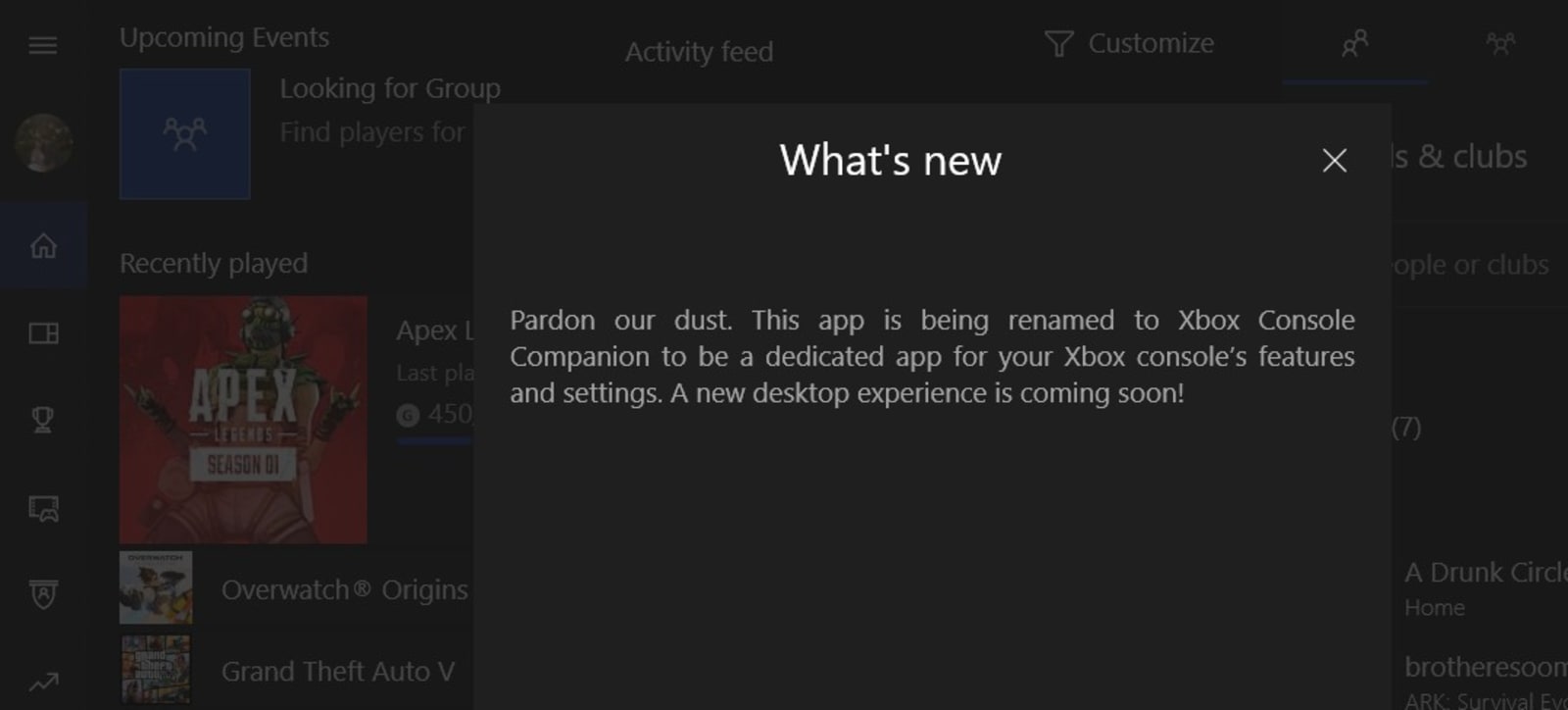
Microsoft is continuing to build on its promise to improve its services for gamers. Last year, it vowed to improve its Microsoft Store and last month unveiled a powerful new take on the Xbox Game Bar. Now its taking stock of its Xbox-branded services on PC. The official Xbox app for Windows, which used to include Xbox Live chat, an activity feed and more, will soon become a slimmer, more lightweight "Console Companion." For now, that just means a name change, though in a previous message Microsoft also teased a new "desktop experience."
While Microsoft hasn't been explicit in what exactly this will mean for the app, it does seem likely that social features such as messaging and party chat will move into the Game Bar. Microsoft has become increasingly cloud-focused in recent times, so this move would certainly speed up its gaming services and give gamers more of a reason to stick with Microsoft's eco-system -- and perhaps even eventually sign up to its game-streaming platform, Project xCloud.
I had some brief time actually using an iPad Pro running iPadOS yesterday, and one of the first things I did was open up a Safari tab Apple had waiting for me: a Google Doc. Google Docs has long been a huge problem on the iPad, for two reasons. First, Google’s own iPad app is god-awful and the company seems hell-bent on not updating it to work better. Second, Google Docs in Safari on the iPad right now redirects you to that app even if you “Request Desktop Site.”
On iPadOS, however, Google Docs in Safari seems great.
Admittedly, I only spent about five minutes poking around, but I went straight for the stuff I didn’t expect to work at all — and it worked. Keyboard shortcuts for formatting and header styling, comments, cursor placement, and even watching real-time edits from another person in the doc all worked.
Since native apps generally work better than web apps on the iPad, I would still probably prefer Google fix its app. Still, this is leaps and bounds better than any Google Docs experience on the iPad before and will be a huge boon for anybody who depends on it for their work.
As for how Apple pulled this off, I have a few answers and a lot of questions.
Answers first: Apple is setting the “user agent” (the thing browsers use to tell websites what they are) to the desktop version of Safari. That means websites won’t default to serving their mobile versions because they see an iOS-based browser. After that, though, Apple is optimizing that site to work with touch (and the iPad’s keyboard). So it was pretty easy to hit all of Google Docs’ menu buttons, and keyboard shortcuts were no problem.
Now, questions: to optimize these sites for touch, Apple says it is doing some re-rendering of the website on the fly to ensure they work on the iPad’s screen. I don’t know whether the touch optimization is part of that or if it’s another layer on top. It probably doesn’t matter unless one of the answers there means a speed hit on slower or older iPads.
The biggest question, of course, is whether Safari on iPadOS is actually “desktop class” in the way that Chrome OS or Safari on the Mac are. Is Apple just taking what is still at bottom its supercharged mobile browser and making sure it is optimized for commonly used desktop sites? Is it actually something like the full desktop Safari codebase on the iPad?
I tend to think it’s the former, but that doesn’t necessarily mean it’s a problem. We will have to wait until the official release to find out just how “desktop class” this version of Safari really is.
The bottom line is that it seems like Apple has heard a lot of the specific complaints about iOS on the iPad over the past year (USB drives, web apps, limited text editing) and taken steps to fix those exact problems. That whack-a-bug approach might not be what people really asked for, but it’s certainly possible that the end result will be the same: it’s going to be harder to argue that the iPad isn’t a “real” computer.
Another WWDC, another set of apps, products, and services that may have just been “Sherlocked” by Apple. The term, used as a colloquial way to refer to when Apple builds a native feature that effectively renders a third-party app or product useless, comes up every year as the company grows its OS offerings and introduces new capabilities worthy of your 30 or so minutes to update.
So what did Apple try to get rid of, or at least borrow from, this year? While not every single item here will be considered dead by the time Apple rolls out iOS 13 and macOS Catalina by the fall, at the very least these developers must now figure out ways to differentiate themselves enough to keep customers from switching to Apple’s version.
Single Sign On
Of all the different companies Apple is trying to go after, it’s obvious that Google and Facebook have been in the company’s crosshairs for the longest time, especially in regards to security. With Sign in with Apple, users can now opt to have Apple sign them up for apps and services instead of connecting through a Facebook or Google account. Apple promises to provide less information to apps than Facebook or Google would, and it even goes a step further and offers users a way to generate a random email that apps and services can spam without giving those companies your actual address. It’ll also allow users to sign in with Face ID.
Menstruation and fertility tracking apps
Apple has been criticized for its lack of comprehensive female health tracking support (it didn’t add female health tracking as a category until 2015), and this year at WWDC it finally announced that users can track their menstruation cycles through both the new Apple Watch Cycles app or the iOS Health app. This feature is rather belated, allowing for third-party apps like Clue, Flo, Eve, and Glow to take over the market for most of the past decade. Some of these apps have also come under fire for using sensitive quantified data for marketing and R&D. Another, Femm, was recently discovered to have been funded by anti-abortion groups, with the app claiming to monitor menstrual cycles while encouraging users to avoid using hormonal birth control.
Being able to track your cycles locally on your device mean users no longer have to worry about what third parties your data is potentially being shared with. It’s also included in the cost of your iPhone and Apple Watch, so no more paying for an app or dealing with ad-supported free apps.
Drawing tablets
macOS Catalina includes a new feature called Sidecar that allows you to use an iPad as a secondary screen to your Mac desktop. Since the iPad supports the Apple Pencil, that means if you own all three items already, you won’t need a Wacom-style dedicated tablet to draw inside your Mac apps anymore. And since the iPad has its own OS, and most drawing tablets don’t, it’s likely to be a much more worthwhile investment for artists who draw and design on the go since they can also use it with any relevant illustration apps. Still, it won't replace huge drawing tablets like the Wacom Cintiq.
Luna, Duet Display, and other sketching / second display apps
In the same vein, Sidecar also means that third-party apps that let you use the iPad as a second screen are no longer needed. Some of the more popular app for this are Luna and Duet Display, though the latter company also offers support for PC to iPad, so it’s not entirely dead just yet for households with varied OSes.
Google Street View
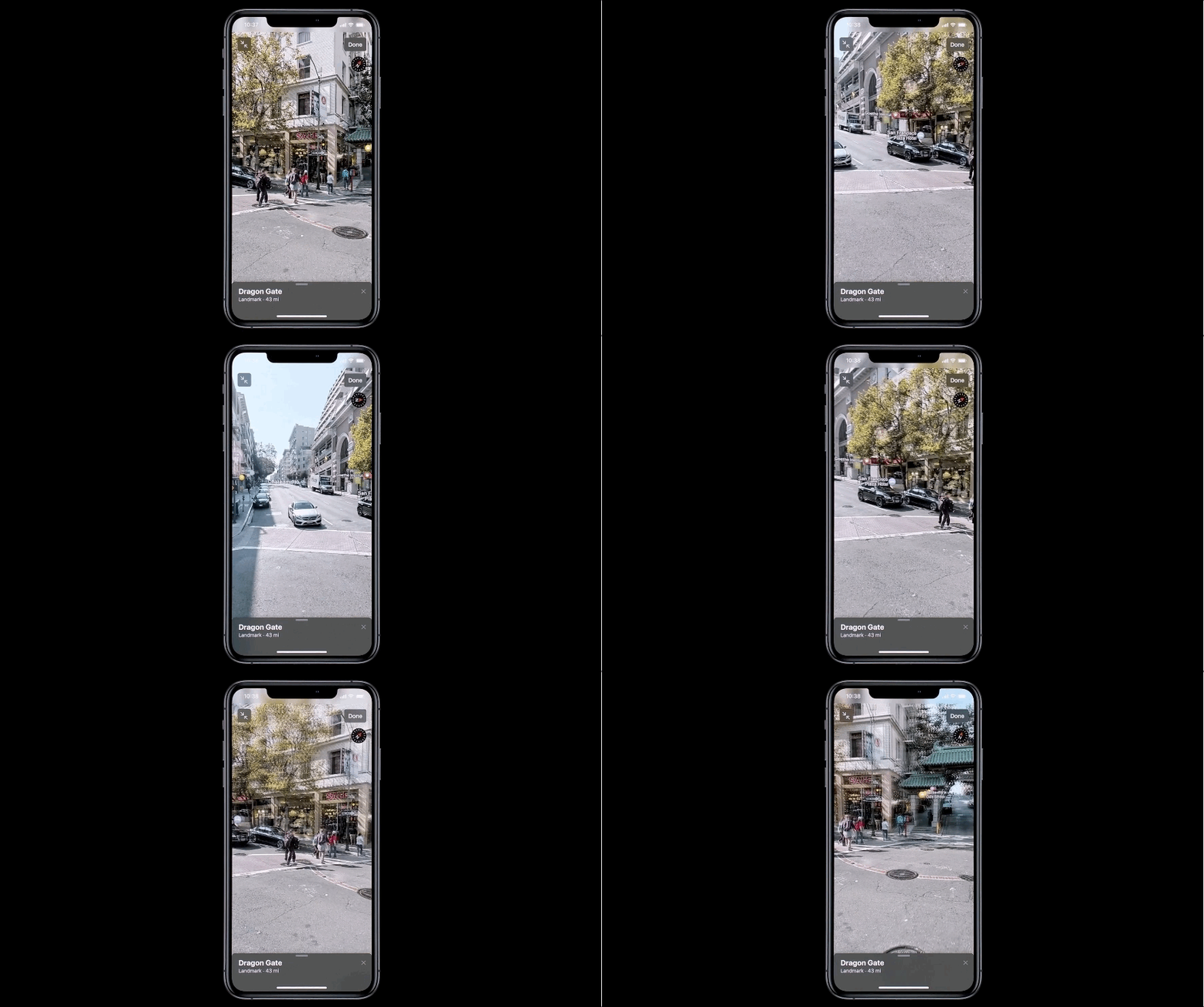
I’m not quite certain that Apple will have Google’s Street View beat just yet, but it’s at least trying. By including its own version of Street View (called “Look Around”), Apple is trying to recruit users back from Google Maps with the hopes that they’ll eventually populate its apps with more data. After all, Google Maps has grown into almost its own travel guide given all the different businesses that are listed alongside user-submitted photos and reviews, and Apple clearly wants a slice of that pie.
Apple Watch voice memo apps
Voice Memo is coming to the Apple Watch in watchOS 6, so there’s not really a reason to use free voice recording apps from third-party vendors anymore. There’s probably less of a reason to use paid ones too, unless they offer more in-depth tools like transcriptions or editing. Still, they’re features that Apple could reasonably build if enough users / developers want them, especially as it works to expand its accessibility tools.
Video editing apps
With iOS 13, users will be able to edit videos to adjust color balance, sharpness, saturation, and more. You can now even rotate and crop videos or apply filters! It’s not as in-depth as other video editing apps that let you cut and paste footage or layover music tracks for a complete edit suite on the go, but it’s enough that the casual person editing to share on social media can do so without a third-party app.
Home security camera cloud storage
Apple has long touted its on-device encryption for any data that users send through, whether that’s passwords, Siri voice data, or health information, and now it’s bringing the same feature to HomeKit to combat third-party home security cameras that are vulnerable to hacking. The new HomeKit Secure Video API tweaks the way these products store security footage by encrypting video content before sending it to iCloud. Apple is also offering 10 days of free recording storage without eating into your iCloud space.
Though Apple isn’t selling its own security camera, it does make it harder for companies that don’t adopt HomeKit to sell theirs given recent news of how home security cameras and doorbells from Google’s Nest and Amazon’s Ring can get hacked. And since encrypted home security videos are included now with the cost of iCloud, it’ll be tough to convince customers to shell out extra money for companies like Nest and Canary to save their videos in the cloud.
SwiftKey / Swype
iOS 13 also offers a new way to type, allowing you to swipe around the keyboard to type the word you want without lifting a finger. Apple calls it “QuickPath Typing,” which sounds an awful lot like Swype and SwiftKey, two of the more popular apps that started offering this feature years ago. It’s like Apple isn’t even going to pretend someone else popularized this input behavior with that naming mechanism.
Tile
Tile's stick-on Bluetooth trackers aren't quite killed by Apple yet, but it does borrow the same idea in terms of how the technology works. Both Tile and Apple’s new Find My app on macOS uses the power of crowdsourcing to locate a misplaced product by letting its Bluetooth connection ping other people’s devices, which relay that info back to the cloud. This allows the Find My app to work even when a MacBook is closed and offline.
So while it does depend on the MacBook having enough battery power to last until it’s found, it is one less device for a Tile to be stuck on. Of course, people don’t just use Tiles for Apple laptops, so for now the device lives to see another day. Emphasis on ”for now.”
If we missed any products Apple duplicated the functions of at WWDC 2019, feel free to drop them in the comments. It’s worth noting that Apple isn’t alone in this practice (we don’t have to tell you how many iPhone knockoffs are out there) — technology companies find, ahem, inspiration from one another or take different amounts of time to launch similar features all the time. As my colleague James Vincent put it, it’s just an occupational hazard of being an app developer nowadays.



:format(webp):no_upscale()/cdn.vox-cdn.com/uploads/chorus_asset/file/16316952/sign_in.jpeg)
:format(webp):no_upscale()/cdn.vox-cdn.com/uploads/chorus_asset/file/16316875/lcimg_5ed154ae_ed1e_4778_8bdc_c8267065dd2f.jpg)

:format(webp):no_upscale()/cdn.vox-cdn.com/uploads/chorus_asset/file/16316946/lcimg_ea7957a3_8557_4cfd_83fd_f053efda82f6.jpg)
:format(webp):no_upscale()/cdn.vox-cdn.com/uploads/chorus_asset/file/8937109/Tile_Mate.jpg)