
Rabu, 29 Mei 2019

Why Apple needs iPad apps on the Mac - The Verge

Let's block ads! (Why?)


https://www.youtube.com/watch?v=cYoGTl1vy1g

2019-05-29 14:00:04Z
52780304246565

Now you can order Alexa to forget what you just said - CNN

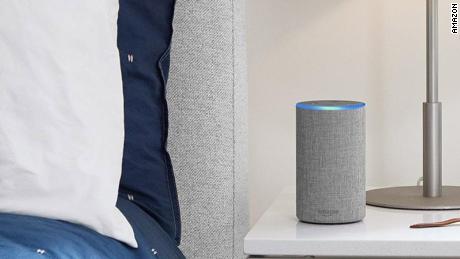
Amazon's new feature could help people worried about their smart speaker collecting too much information.
Starting Wednesday, you'll be able to say, "Alexa, delete everything I said today" for Alexa-enabled gadgets to wipe voice recordings made from midnight that day until that moment. In a couple weeks, you'll also be able to say "Alexa, delete what I just said" and it will expunge the voice recording of your most recent request.
The commands are part of a broader push toward privacy. The company also announced a $90 Echo Show 5 smart-screen device which comes with a physical cover for its front-facing camera.
Hey Siri, stop perpetuating sexist stereotypes, UN says
The privacy-focused moves come as consumers, consumer-privacy advocates and legislators are becoming increasingly wary of Alexa-enabled gadgets.
Earlier this month, a group of US senators and 19 consumer and public health advocates urged the Federal Trade Commission to investigate whether Amazon's Echo Dot Kids Edition is in violation of the Children's Online Privacy Protection Act. They alleged it doesn't follow the law's parental-consent requirement and allow parents to adequately delete their kids' information (an Amazon spokesperson told CNN Business that the device is COPPA compliant).
In April, Bloomberg reported that Amazon (AMZN) workers listen to audio clips to help the company improve Alexa's understanding of speech.
But the online retailer clearly wants people to feel comfortable placing Alexa-enabled gadgets all over the house. One of the marketing images for the Echo Show 5 shows it perched on a bedside table next to jewelry and a family photo. Amazon is the leader in the fast-growing smart speaker market, according to data from market-research firm Canalys — ahead of competitors such as Google and Apple, which have touted the various privacy features in their own competing devices.
Amazon's Echo Show 5 has a physical shutter to block its front-facing camera.
The camera cover on the Echo Show 5 is a first for one of Amazon's Alexa devices. Users can slide it over the camera and allow the device to continue listening for the wake word, "Alexa." As with existing Echo Show devices, a button electrically disconnects the microphone and camera.
Amazon also announced on Wednesday that in an effort to make it easier for users to do things such as delete spoken commands and see privacy settings, it is grouping Alexa privacy settings online into an Alexa Privacy Hub. Privacy controls will also remain available within Amazon's Alexa apps.

Let's block ads! (Why?)


https://www.cnn.com/2019/05/29/tech/alexa-delete-everything-privacy/index.html

2019-05-29 13:07:00Z
52780304690255

Apple publicly makes its case for the App Store - Engadget

Sponsored Links

Apple

Apple has published a lengthy post explaining and extolling the App Store's guidelines and developer program, following the Supreme Court's decision in an antitrust case related to its application emporium. On May 13th, the Supreme Court has ruled against the tech giant in a long-standing price-fixing suit, which accuses the company of maintaining a monopoly over iOS app distribution to keep prices high and to be able to take a 30 percent commission.

The court's decision allows customers to proceed with a lawsuit against Apple under antitrust laws -- something the company argued shouldn't be allowed, because it takes its cut from developers and not consumers themselves. After the ruling was announced, Apple released a statement to stress that the "App Store is not a monopoly by any metric" and that "[d]evelopers set the price they want to charge for their app[s]." It added: "[The company] has no role in that."

Today, Cupertino has reiterated those sentiments in its post, stressing that 84 percent of the apps in its Store are free and that it doesn't always earn anything from them. The company even detailed the pricing tiers developers can choose from, which all state that it only takes a 30 percent cut from paid apps or from in-app purchases and subscriptions within free ones.

All those lead to the final part of the post, which highlights a line that says the App Store is "[a] store that welcomes competition." The tech giant listed its own apps (such as Apple Music and Maps) alongside their competitors (such as Spotify and Waze) available on the App Store. Perhaps as a way to say that while it's true that the iOS platform doesn't allow downloads from third-party services, users still have a lot of non-Apple options to choose from. Apple also reminded everyone in the post that all those options went through a rigorous review process to ensure "that apps are held to a high standard for privacy, security, and content..."

While the Supreme Court sided with the plaintiffs in the antitrust case, that particular court battle is far from over, seeing as their victory only means they can proceed with a lawsuit. In its statement after the decision came out, Apple said it's "confident [it] will prevail when the facts are presented." The company's post likely gives us a glimpse of the "facts" it intends to present in court.

Source: Apple
In this article: app store, apple, gear, internet, mobile
All products recommended by Engadget are selected by our editorial team, independent of our parent company. Some of our stories include affiliate links. If you buy something through one of these links, we may earn an affiliate commission.
Shares
Share
Tweet
Share
Save
Comments

Let's block ads! (Why?)


https://www.engadget.com/2019/05/29/apple-makes-its-case-for-the-app-store/

2019-05-29 12:39:06Z
52780304246565

Microsoft seems to be planning to revamp Windows with “a modern OS” - Fast Company

Microsoft seems to be planning to revamp Windows with “a modern OS”

Microsoft seems to be planning to revamp Windows with “a modern OS”
[Photo: Tadas Sar/Unsplash]

Speaking at Computex in Taipei, Microsoft’s vice president of consumer and device sales Nick Parker took to the stage to tease what could be the most significant revamp to the Windows operating system in years. Maybe. It’s kinda hard to tell because Parker was relatively vague about things.

Instead of referencing a future version of Windows, Parker talked about what “a modern OS” should consist of. This “modern OS” mantra was then expanded upon in a blog post on Microsoft’s site. Quoting from the blog post directly, a modern operating system should be:

An OS that provides a set of enablers that deliver the foundational experiences customers expect from their devices, and includes a set of delighters that deliver innovative human centric experiences. Enablers include seamless updates – with a modern OS updates are invisibly done in the background; the update experience is deterministic, reliable, and instant with no interruptions! A modern OS, is also secure by default, the state is separated from the operating system; compute is separated from applications; this protects the user from malicious attacks throughout the device lifecycle. Always connected -with a modern OS Wifi, LTE 5G will just work – and users never have to worry about a deadspot. All of a users devices are aware and connected to each other. A modern OS provides sustained performance, from the moment a user picks up their device – everything is ready to go – without having to worry about the next time the PC needs to be charged. These enablers will satisfy customer’s basic needs, but to truly differentiate we must also delight them. A modern OS does this by enabling cloud-connected experiences that use the compute power of the cloud to enhance users experiences on their devices.  These experiences are powered by AI, so a modern OS is aware of what a user is doing tomorrow and helps them get it done, and it enhances applications making them more intelligent. A modern OS is also multi-sense. People can use pen, voice, touch, even gaze – what ever input method a user wants to use works just as well as the keyboard and mouse. Finally, a modern OS provides the ultimate in form factor agility. A modern OS has the right sensor support and posture awareness to enable the breadth of innovative form factors and applications that our partner ecosystem will deliver.

So, if that does all refer to the next (or at least upcoming version) of Windows, here are the major things we can expect:

  • Software updates that are carried out automatically and invisibly in the background.
  • Improved security via compartmentalization of states and apps, which will help protect against attacks.
  • 5G support.
  • Performance boost by leveraging AI cloud computing processing power.
  • A “smart” OS that can tell what the user is doing and thus suggest relevant apps or actions.
  • User inputs that go beyond mouse and keyboard, including pens, voice, touch, and eye control via gazes.

Microsoft goes on to explain that “these enablers and delighters underpin our vision for a Modern OS, [and] they will provide the foundational elements for an evolution of the PC ecosystem and enable partners  to deliver the more human-centric experiences of tomorrow.”

Note that there they capitalized “Modern OS” as if its a brand name. Could Microsoft be ready to ditch the Windows brand entirely in favor of a new OS name? (Apple did just that a few years ago by ditching the “OS X” name for “macOS.”) Either way, it’s clear Microsoft has big plans for the OS in the future.

advertisement
advertisement

Let's block ads! (Why?)


https://www.fastcompany.com/90356371/microsoft-seems-to-be-planning-to-revamp-windows-with-a-modern-os

2019-05-29 11:50:00Z
52780305043256

'Pokémon Masters' brings old trainers together in one mobile game - Engadget

Sponsored Links

Pokémon

The Pokémon Company is working on another mobile game in addition to Sleep, which is designed to track your sleeping time to unlock new characters. It's called Pokémon Masters, and it will give you a way to fight alongside trainers from the previous main games in the franchise, appealing to the nostalgia of long-time fans. The company has revealed the project at a press conference in Tokyo, where it has also announced its Home cloud service for monster trading between platforms and Detective Pikachu for the Nintendo Switch.

According to the company, the idea of bringing back familiar faces like Misty and Brock for another game came from a suggestion by Ken Sugimori of Game Freak. To make that vision a reality, it teamed up with DeNA, the mobile game developer behind Super Mario Run and Fire Emblem Heroes. Pokémon Masters is set to launch for both Android and iOS devices sometime this year.

In this article: gaming, mobile, Pokémon Masters
All products recommended by Engadget are selected by our editorial team, independent of our parent company. Some of our stories include affiliate links. If you buy something through one of these links, we may earn an affiliate commission.
82 Shares
Share
Tweet
Share
Save
Comments

Let's block ads! (Why?)


https://www.engadget.com/2019/05/29/pokemon-masters/

2019-05-29 09:02:36Z
CAIiEI8RHSG0XjEz8MXZay1ShBUqGAgEKg8IACoHCAowwOjjAjDp3xswtuSvAw

Microsoft hints at new modern Windows OS with ‘invisible’ background updates - The Verge

Microsoft still hasn’t officially confirmed the existence of its rumored Windows Lite operating system, but the software giant is dropping some pretty big hints about the future of Windows today. Nick Parker, Microsoft’s corporate vice president of consumer and device sales, appeared on stage at Computex today to detail the company’s vision for a modern operating system. While Parker didn’t unveil Windows Lite, a rumored lightweight version of Windows for dual-screen and Chromebook-like devices, he did reveal how Microsoft is preparing for new device types.

These new devices will require what Microsoft calls a “modern OS,” that includes a bunch of “enablers” like seamless updates. We’ve seen various promises about Windows Updates being improved over the years, but Microsoft is now promising that “modern OS updates are invisibly done in the background; the update experience is deterministic, reliable, and instant with no interruptions!” No interruptions and done in the background sounds very different from the Windows Update experience available on Windows 10 today, and it sounds far more Chrome OS-like.

This “modern OS” is also secure by default according to Microsoft, meaning the state is separated from the OS and compute is “separated from applications,” which sounds a lot more cloud-powered than what we’re used to today. Microsoft also wants this modern OS to work with 5G connectivity, and to include a variety of inputs like pen, voice, touch, even gaze.

Perhaps the most telling part of Microsoft’s Computex blog post is that the entire paragraph describing this “modern OS” never mentions Windows. “These enablers and delighters underpin our vision for a Modern OS, they will provide the foundational elements for an evolution of the PC ecosystem and enable partners to deliver the more human-centric experiences of tomorrow,” explains Parker.

Some of these hints at a modern OS could already apply to Windows as it exists today, but Microsoft also describes its focus on “enabling cloud-connected experiences that use the compute power of the cloud to enhance users experiences on their devices” for this modern OS. It’s clear that whatever Microsoft is working on for Windows Lite and beyond, it will involve seamless updates, security improvements, 5G connectivity, cloud-powered apps, new form factors, and AI support. Microsoft chose to bold all these important parts in its paragraph detailing its modern OS future:

These new modern PCs and innovative devices the ecosystem will continue to build and bring to market in the future require a modern operating system. An OS that provides a set of enablers that deliver the foundational experiences customers expect from their devices, and includes a set of delighters that deliver innovative human centric experiences. Enablers include seamless updates – with a modern OS updates are invisibly done in the background; the update experience is deterministic, reliable, and instant with no interruptions! A modern OS, is also secure by default, the state is separated from the operating system; compute is separated from applications; this protects the user from malicious attacks throughout the device lifecycle. Always connected -with a modern OS Wifi, LTE 5G will just work – and users never have to worry about a deadspot. All of a users devices are aware and connected to each other. A modern OS provides sustained performance, from the moment a user picks up their device – everything is ready to go – without having to worry about the next time the PC needs to be charged. These enablers will satisfy customer’s basic needs, but to truly differentiate we must also delight them. A modern OS does this by enabling cloud-connected experiences that use the compute power of the cloud to enhance users experiences on their devices. These experiences are powered by AI, so a modern OS is aware of what a user is doing tomorrow and helps them get it done, and it enhances applications making them more intelligent. A modern OS is also multi-sense. People can use pen, voice, touch, even gaze – what ever input method a user wants to use works just as well as the keyboard and mouse. Finally, a modern OS provides the ultimate in form factor agility. A modern OS has the right sensor support and posture awareness to enable the breadth of innovative form factors and applications that our partner ecosystem will deliver

Microsoft was rumored to be discussing plans for dual-screen devices and Windows Lite at the company’s Build conference earlier this month. Those plans never materialized, and it did feel like there was a lack of future Windows information at the developer event. Even the next major Windows 10 update, codenamed 19H2, is shrouded in secrecy. Although it’s expected to arrive in October, Microsoft has already publicly started testing a version of Windows 10 it won’t deliver until 2020. We still don’t know what’s coming in the October 2019 update, and it could be a very minor update this time around.

Microsoft’s Windows Lite plans may have been delayed somewhat by the company’s surprise decision to switch to Chromium for the Edge browser. If Windows Lite is more cloud-powered and relies on the browser for a lot more experiences, then a shift to Chromium will have impacted this more modern operating system. For now, Microsoft is only willing to drop hints about what we can expect from the immediate future of Windows.

Let's block ads! (Why?)


https://www.theverge.com/2019/5/29/18643857/microsoft-windows-lite-modern-operating-system-computex-2019-hints

2019-05-29 08:43:43Z
52780305043256

Intel dual-screen gaming laptop prototype Honeycomb Glacier Hands-On at Computex 2019 - Engadget

Let's block ads! (Why?)


https://www.youtube.com/watch?v=o7_lLBCsYaI

2019-05-29 08:09:55Z
52780305337048